
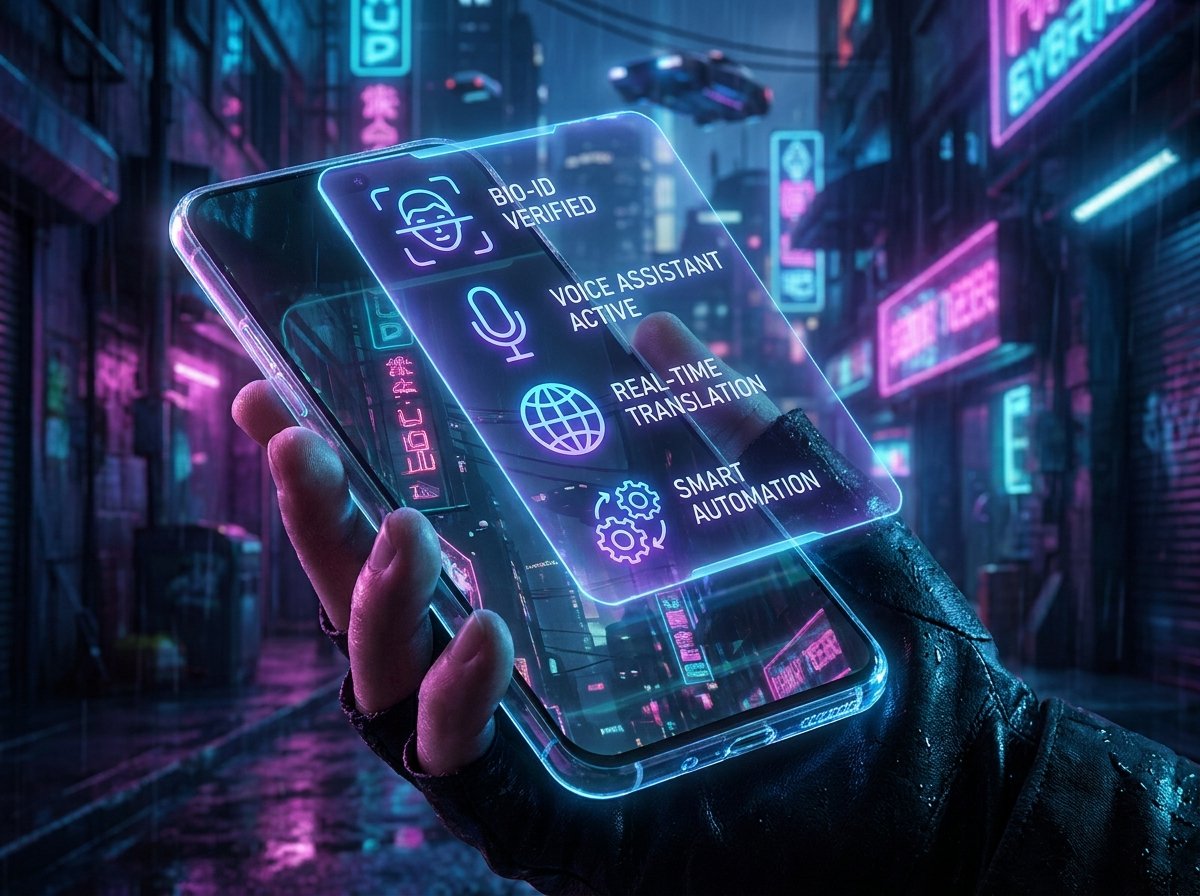
6 Mind-Blowing AI Features Coming to Phones in 2027
Smartphone AI is moving past one-off tricks like photo cleanup and text summaries. The clearest direction now is toward phones that can understand your environment, remember context, plan tasks, and act on your behalf with less manual input.
That matters because the 2027 wave of phone AI will likely feel less like opening an app and more like working with a live assistant that sees, hears, remembers, and helps across the whole device. Google’s Project Astra prototype, Google Cloud’s 2026 AI agent trends report, and Qualcomm’s edge-AI push all point in that direction.
1. AI assistants that can control your phone
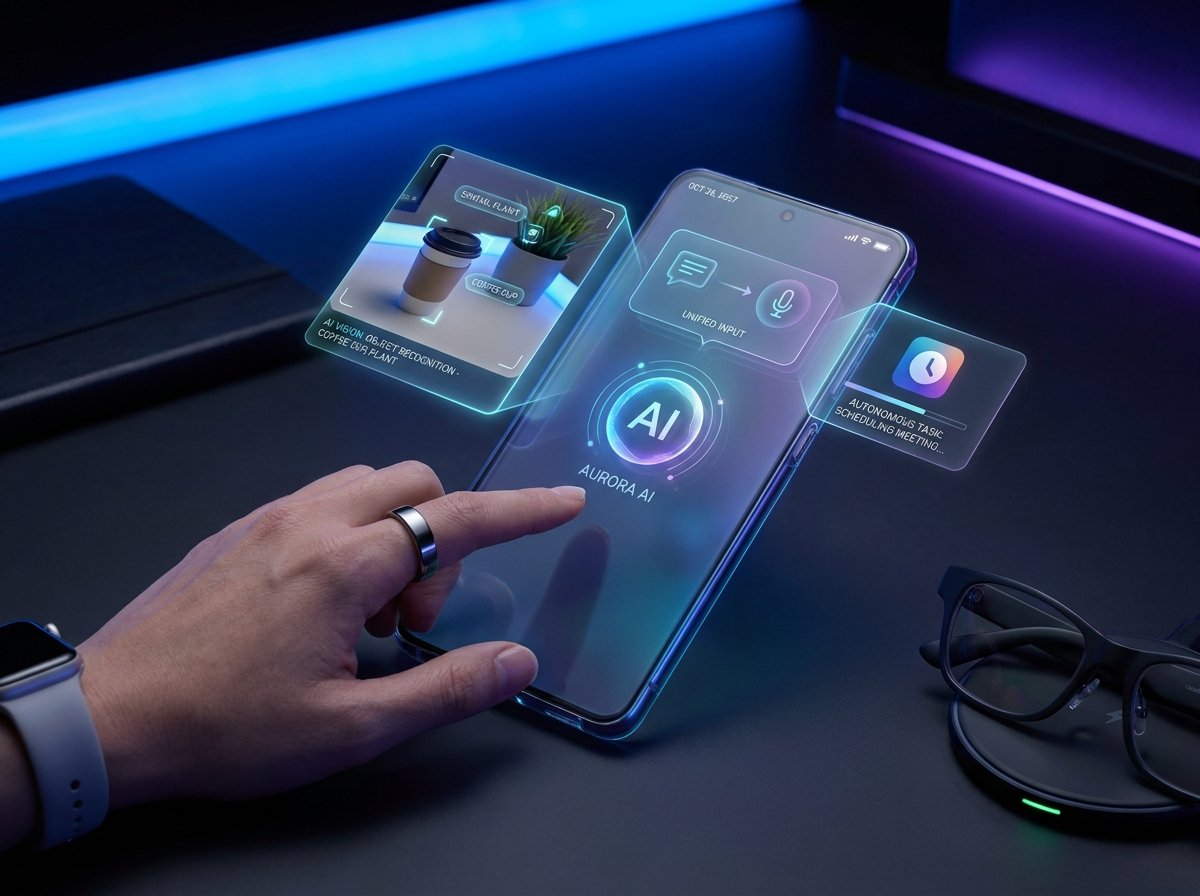
The biggest shift coming is agentic phone control. Google’s Project Astra is explicitly framed as a path toward a universal AI assistant, and 2025–2026 demos showed an AI agent that can understand context, make plans, and act inside Android apps on a user’s behalf.
That means the assistant of 2027 may not just answer questions. It may be able to search for information, open the right app, fill in steps, cross-reference data from Gmail, Maps, Calendar, Photos, or Search, and complete simple multi-step tasks without you tapping through every screen.
2. Camera-first AI that understands the world around you
Phones are also becoming live visual assistants. Google says Project Astra can react to the visual world in real time, use spatial processing, and work with Maps, Photos, and Lens to identify objects and environments as the camera moves.
This matters because phone cameras are turning into context sensors, not just image capture tools. By 2027, that could mean live scene understanding for shopping, travel, accessibility, learning, repairs, and navigation, where the phone recognizes what you are looking at and helps immediately, instead of waiting for a typed query.
3. Bigger on-device models with less cloud dependence
One of the most important 2027 trends is where AI runs. Qualcomm says on-device AI is a more capable, cost-efficient, reliable, private, and secure path forward, while edge-AI reporting in 2026 says smartphones are increasingly moving reasoning and inference closer to the user rather than relying fully on the cloud.
If that continues into 2027, phones will handle more advanced tasks locally. That could include private document analysis, offline voice interaction, faster summaries, local multimodal reasoning, and more personalized assistance without sending as much personal data to external servers.
4. Truly multimodal search and conversation
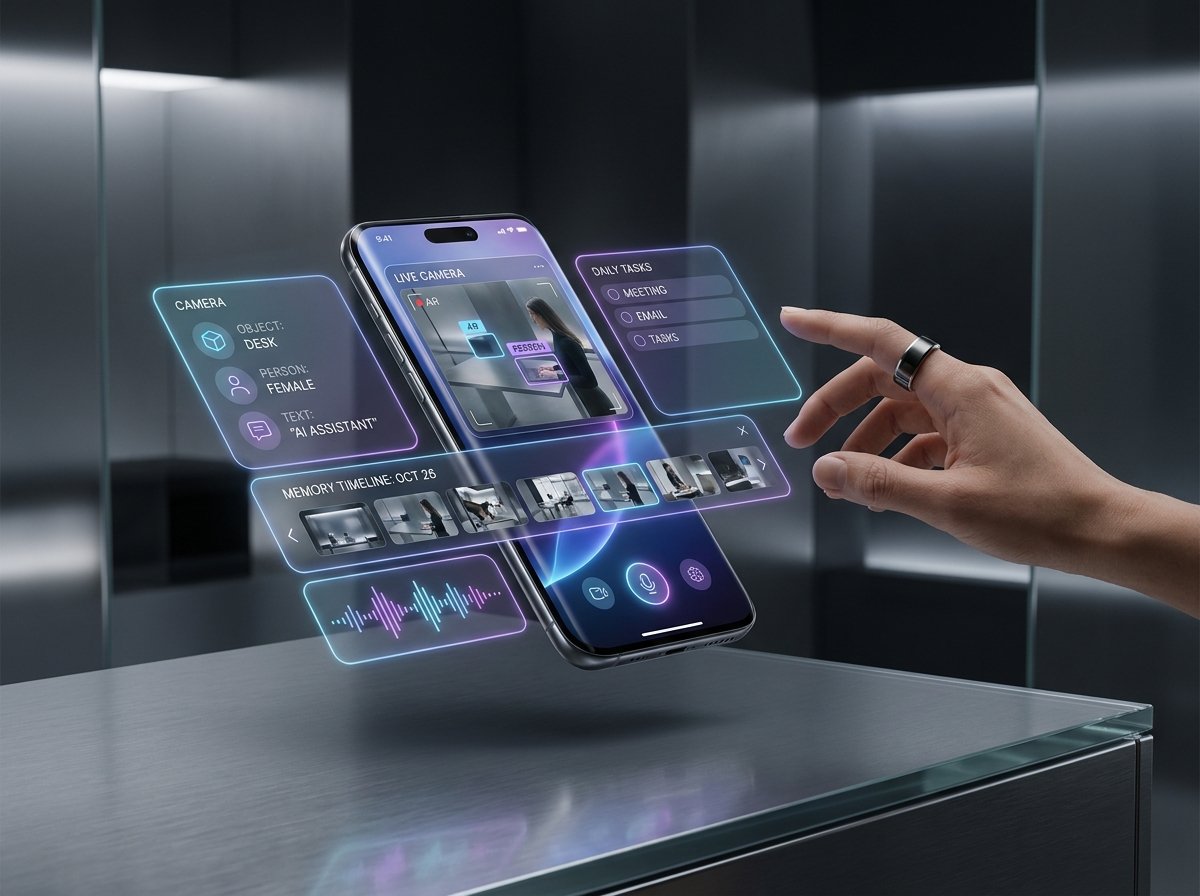
Today’s AI assistants already combine text, voice, and images, but the 2027 version should feel much more seamless. CNET’s reporting on smartphone AI points to a future where assistants can speak, listen, see through the camera, understand your screen, and maintain context across follow-up questions, while Project Astra is designed around those exact multimodal abilities.
That means future phone search may stop looking like “type a query, get results.” Instead, you may ask a spoken question while showing the camera a product, a document, a street, a broken object, or a chart on screen, and the phone will combine all of that context into one answer or one action.
5. Hyper-personalized proactive help
The next wave of AI is not only reactive. Google’s 2026 AI agent trends report says concierge-style experiences are becoming standard, with agents handling more routine decisions and offering more personalized support.
On phones, that could mean assistants that proactively surface the right app, summarize your day, flag important changes, prepare for meetings, suggest follow-ups, and organize tasks based on your actual habits. Earlier smartphone-AI reporting also described a future where phones can extract topics from calls, understand keywords from messages, and recommend what to do next before you ask.
6. AI that blends phones with wearables and new form factors
The future of phone AI is also bigger than the phone itself. Project Astra has already been shown working with smart glasses, and Google describes it as a research path for broader products, not only a single smartphone feature.
That suggests 2027 phones may act as the central brain for a wider AI environment. Your phone could handle the heavy coordination,n while glasses, earbuds, watches, or other camera-equipped devices supply live audio, video, location, and environmental input for a more continuous assistant experience.
What this means
The six most likely 2027 AI upgrades are:
-
Agentic assistants that can act inside apps.
-
Real-time camera intelligence with spatial understanding.
-
Larger on-device AI models with better privacy and offline use.
-
Multimodal search across voice, camera, screen, and memory.
-
Concierge-style proactive assistance based on habits and context.
-
Cross-device AI that links phones with wearables and glasses.
The common pattern is clear. The smartphone of 2027 will probably be less about launching apps manually and more about delegating goals to a system that understands context and executes parts of the work for you.
FAQ
Are these 2027 phone AI features confirmed?
No. They are forward-looking expectations based on current company demos, published AI agent trend reports, and on-device AI roadmaps.
What is the most important 2027 AI phone trend?
The strongest trend is agentic AI, where assistants can understand goals, plan steps, and take actions across apps instead of only answering questions.
Will 2027 phones rely less on the cloud?
Probably at least for many tasks. Qualcomm and edge-AI coverage both suggest that more inference and reasoning are moving onto the device for speed, privacy, and reliability.
Will phone cameras become more important for AI?
Yes. Project Astra and related reporting strongly suggest that future assistants will use the camera as a key input for understanding the real world in real time.
Will these features work only on flagship phones?
Most likely at first. Advanced agentic and multimodal AI features usually arrive first on premium phones with stronger NPUs and memory, then spread downward later.
Could this change how we use apps?
Yes. If assistants can plan and act across apps, users may spend less time jumping between apps manually and more time giving high-level instructions.
