
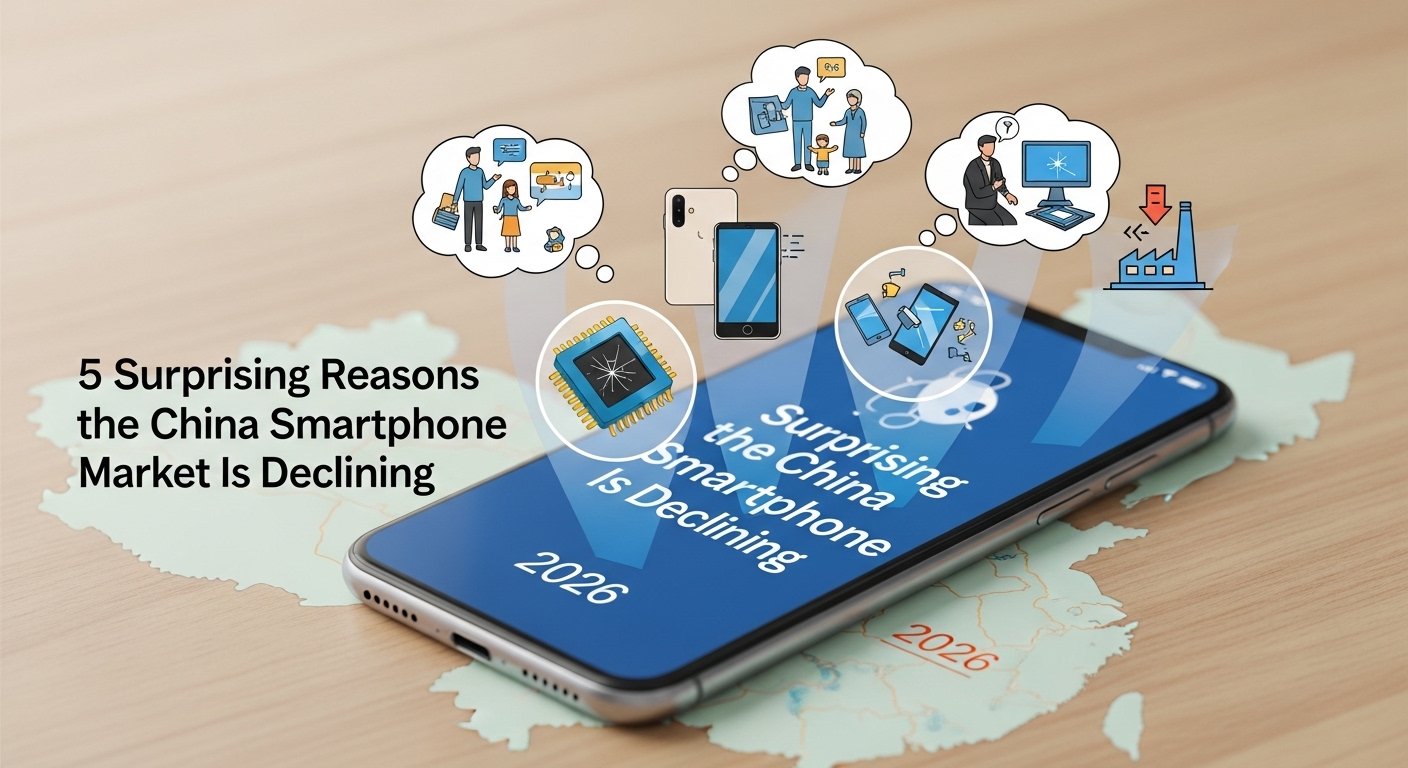
5 Surprising Reasons the Chinese Smartphone Market is Declining
China remains one of the world’s most important smartphone markets, but the story in 2026 is no longer simple growth. Recent market reports show shipments falling again, and the reasons go beyond the usual explanation of “weak consumer demand.” Counterpoint said China’s smartphone shipments dropped 4% year over year in Q1 2026, while Omdia reported a 1% drop to 69.8 million units in the same quarter.
What makes this decline more interesting is that it is happening even as some brands are still growing. Huawei and Apple both gained share in recent reports, which shows the market is not collapsing equally across all players. Instead, the broader slowdown is being shaped by cost pressure, shifting consumer behavior, tighter competition, and a market that no longer rewards basic spec upgrades the way it once did.
This article breaks down five surprising reasons the Chinese smartphone market is declining, using current 2026 data and market commentary. The goal is not just to explain the downturn, but to show why it is happening now, which brands are most exposed, and what this says about the next phase of China’s mobile industry.
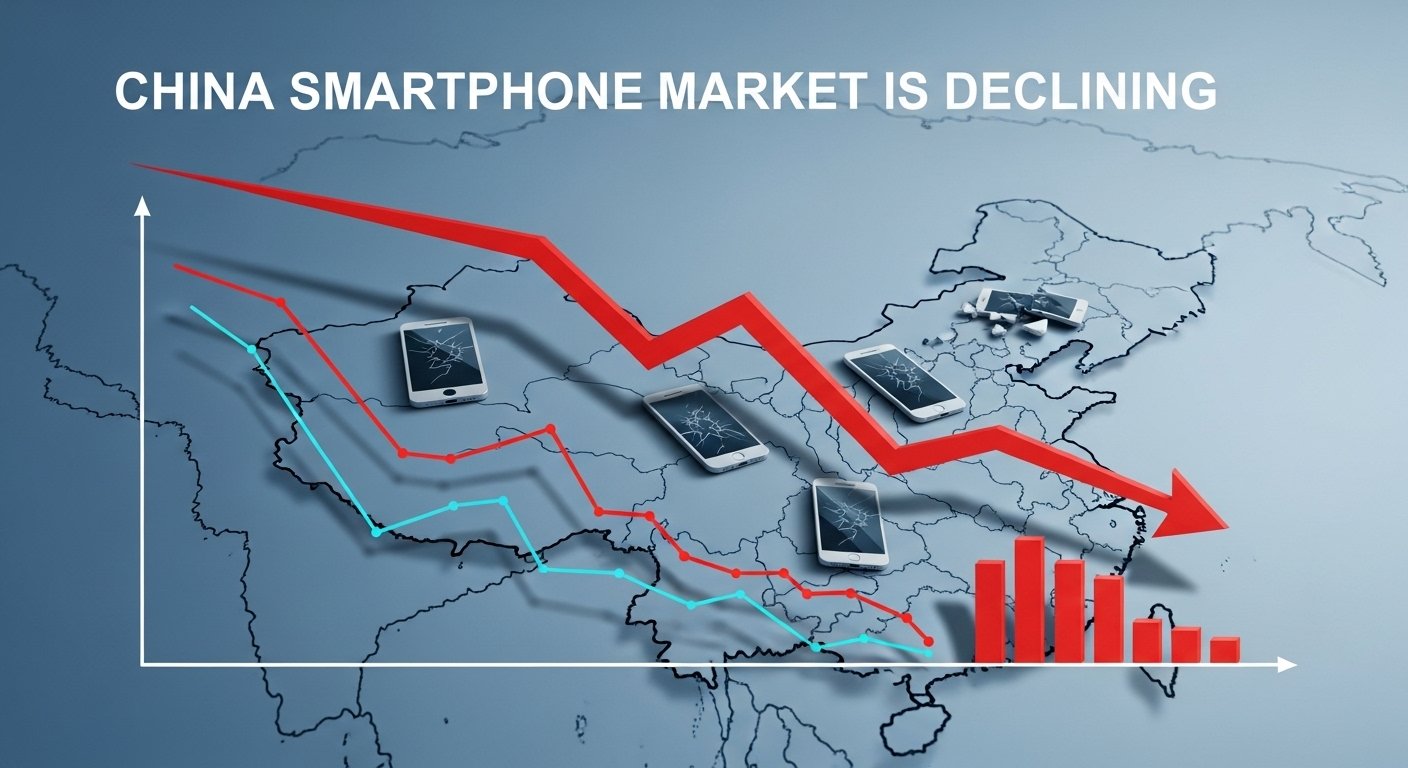
Table of Contents
-
The latest picture of China’s smartphone market
-
5 surprising reasons the market is declining
-
What the slowdown means for brands
-
FAQ
Market Snapshot
The slowdown is real, even if the exact size varies by research firm. Counterpoint’s preliminary data said China’s smartphone shipments fell 4% in Q1 2026, while Omdia said the mainland market declined 1% year over year in the quarter to 69.8 million units.
That difference in measurement does not change the bigger point. Both firms say the market is under pressure, and both link the weakness to rising costs and weaker consumer appetite. Omdia goes further and projects that China’s smartphone market will shrink by 10% in 2026 as memory costs continue to bite.
The decline is also not hitting every brand equally. Omdia said Huawei ranked first in Q1 2026 with a 20% market share, while Apple followed with 19%, and it noted that both brands largely avoided broad price hikes while other major vendors raised prices on select models by 10% to 30%.
That creates the central puzzle of the market: shipments are falling overall, but the strongest brands are still finding room to grow. The decline is therefore less about smartphones becoming irrelevant and more about the market becoming harder, more expensive, and more selective.
5 Reasons Why It’s Falling
1. Rising memory costs are pushing up phone prices
This is the clearest reason behind the 2026 slowdown. Omdia says rising component costs, especially memory, pushed major vendors to raise retail prices on select models by 10% to 30% in Q1 2026, and said this had a clear negative impact on consumer purchasing sentiment.
Counterpoint and related reporting point in the same direction. TradingKey, citing Counterpoint data, said rising memory chip prices and supply-chain issues were key reasons China’s smartphone market declined in Q1 2026, while Reuters-style coverage on Yahoo Finance said some Android brands hiked prices due to escalating memory costs.
This matters even more in China because price sensitivity remains high in the mid-range and lower-end segments. When manufacturers pass higher component costs to buyers, many consumers delay purchases rather than accept a noticeably more expensive device.
2. Last year’s subsidy boost created a brutal comparison
Sometimes a decline looks worse because the previous period was unusually strong. Counterpoint’s Q1 2026 report says the decline was mainly due to a high base effect from last year’s government subsidy program, which means 2025 demand was artificially lifted and made 2026 comparisons tougher.
This is a surprisingly important point because it changes how the slowdown should be read. A weak year after an incentive-fueled year does not always mean demand suddenly collapsed; it can mean part of the demand was pulled forward earlier.
That also helps explain why subsidies did not fully rescue the market this time. Yahoo Finance’s Reuters-sourced report said government subsidies introduced at the beginning of 2026 failed to stimulate sluggish consumer appetite, which suggests incentives alone are no longer enough when prices rise, and upgrade motivation weakens.
3. Consumers are keeping phones longer
One of the biggest structural reasons for the decline is the longer replacement cycle. Omdia says price increases are further extending the market’s downward trajectory, and related market analysis says rising costs may keep the replacement cycle lengthening through 2026.
This is happening because modern smartphones have matured. For many buyers, last year’s device is still good enough, especially when performance, cameras, and displays have improved so much that the jump to a new model no longer feels urgent unless the upgrade is truly meaningful.
That is why the market is becoming more innovation-sensitive. Omdia says meaningful innovation in flagship and foldable devices is expected to help stabilize demand, which implies the opposite is also true: when upgrades feel incremental, many consumers simply wait.
4. The market is becoming too concentrated
Another surprising reason behind the decline is market concentration. Omdia says the top six vendors, Huawei, Apple, Xiaomi, OPPO, vivo, and HONOR, accounted for 94% of the market in Q1 2026.
At first glance, concentration might seem unrelated to overall demand, but it changes the market in important ways. Omdia says top vendors now hold major advantages in supply chains, research and development, operating systems and services, ecosystems, and distribution, which leaves smaller and weaker players with less room to compete effectively.
A more concentrated market can become less dynamic for price-driven growth. When weaker brands struggle to offer compelling alternatives and stronger brands focus more on balancing profitability with volume, the market can cool because fewer players are aggressively expanding demand with disruptive value.
5. Consumers now want real innovation, not just specs
This may be the most important long-term reason. China’s smartphone market is no longer in a phase where small spec upgrades guarantee mass replacement demand. Omdia says meaningful innovation in flagship and foldable devices may help stabilize demand, pointing to improvements such as better imaging sensors, near crease-free foldables, lightweight designs, and higher-capacity batteries.
IDC China also appears to be reading the market this way. China Daily, citing IDC commentary, says success in 2026 will no longer rely only on supply-chain control or competing on specifications, but on whether brands can position themselves well amid cost pressures and build barriers in the “AI and ecosystem” race.
That means the market is declining partly because consumers have become harder to impress. A new phone now needs to feel clearly smarter, more useful, or more emotionally desirable, not just slightly faster.
Brand Impact
The decline is not spreading evenly. Omdia said Huawei and Apple largely avoided broad price hikes and used the cost environment as a chance to capture market share, while major vendors such as Xiaomi, HONOR, OPPO, and vivo raised prices on select models.
That difference matters because it shows how downturns can reward strong positioning. Brands with better supply chains, stronger ecosystems, or more pricing flexibility can protect demand, while brands caught between rising costs and price-sensitive buyers face sharper pressure.
Huawei may also have a structural advantage in this environment. Reuters-style reporting on Yahoo Finance said Huawei may benefit from relying more on local suppliers, who typically charge lower rates than international counterparts, giving it a cost buffer as memory prices rise.
This helps explain why some brands are still growing in a declining market. The winners are not escaping the slowdown entirely; they are simply better positioned to survive a more expensive, more selective smartphone cycle.
FAQ
1. Is China’s smartphone market really declining in 2026?
Yes. Counterpoint said China’s smartphone shipments fell 4% year over year in Q1 2026, while Omdia reported a 1% decline in the same quarter and projected a 10% fall for the full year.
2. What is the biggest reason for the decline?
The strongest immediate reason is rising component costs, especially memory. Omdia said these costs pushed vendors to raise retail prices by 10% to 30% on select models, which hurt consumer purchasing sentiment.
3. Why are some brands still growing if the market is down?
Because the downturn is uneven. Omdia said Huawei and Apple largely avoided broad price hikes and became more attractive to consumers, helping them gain share while the overall market weakened.
4. Are government subsidies helping?
Not enough to reverse the trend. Counterpoint said last year’s subsidy program created a high base effect, and Reuters-style reporting said 2026 subsidies failed to revive weak consumer appetite.
5. Is innovation still important in China’s smartphone market?
Yes, and possibly more than before. Omdia said meaningful innovation in flagships and foldables may help stabilize demand, while IDC commentary cited by China Daily said brands now need stronger AI, ecosystem value, and emotional resonance, not just raw specifications.
6. Why does market concentration matter?
Because the top brands now dominate the market. Omdia said the top six vendors held 94% share in Q1 2026, which raises pressure on smaller brands and makes the market more difficult and less flexible overall.
China’s smartphone market is declining not because people suddenly stopped caring about phones, but because the market has become more expensive, more mature, and harder to excite. Higher memory costs, weaker subsidy effects, longer replacement cycles, stronger concentration, and the need for real innovation are all pushing the industry into a more selective era.
That makes 2026 a turning point. Brands that can control costs and deliver genuinely useful innovation may still grow, but the days when almost any new model could ride broad market momentum look increasingly over.
