
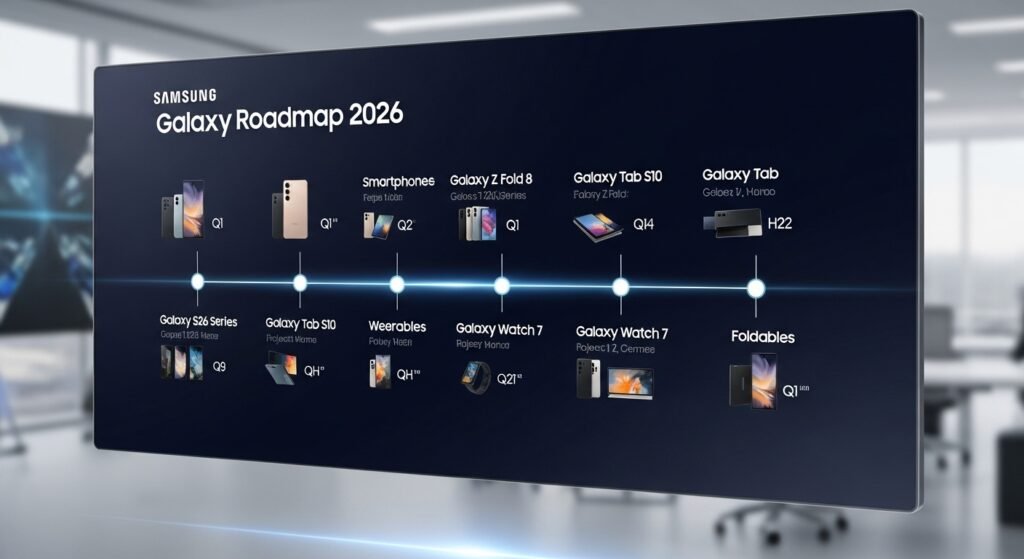
The phrase “roadmap” matters because Samsung’s lineup is now less about a single hero phone and more about timing and fit. A Galaxy S model can be the best choice for camera consistency and long-term performance, while the right Galaxy A model often wins on value and battery comfort. Foldables remain a premium category that makes the most sense when the larger screen replaces part of a tablet workload. Across all tiers, One UI updates and security support are increasingly part of the product, not a bonus.
How Samsung’s 2026 lineup is likely to flow
Samsung releases are best understood as “waves” rather than isolated launches. Each wave targets a different buyer: flagship performance, mainstream value, or form-factor experimentation. That rhythm also shapes pricing, trade-ins, and which models are easiest to find in stock.
Wave 1: Flagship season
The first wave of the year tends to be the most headline-driven. Flagship launches usually bring the largest platform shifts: the newest silicon, the most aggressive camera processing updates, and the biggest marketing push for AI tools that run locally on-device.
Flagship season also sets the tone for the rest of the lineup. Features introduced here often “trickle down” over time through mid-range devices and future software updates.
Wave 2: Mid-range refreshes
Mid-range launches typically focus on practical upgrades: better battery efficiency, improved displays, and camera reliability rather than maximum specs. This is also where Samsung tends to scale features to hit multiple budgets, from entry-level phones up to premium mid-range.
For many buyers, this wave represents the best real-world value, especially when paired with regional promotions and storage bonuses.
Wave 3: Foldables and large-screen experiences
Mid-year is usually where foldables take center stage. These launches matter beyond the foldable niche because Samsung often ties them to multitasking improvements, productivity features, and UI refinements that later reach other devices.
Foldable season can also trigger price drops on last year’s foldables, making them more attainable for buyers who were waiting for better value.
Wave 4: Late-year updates, deals, and “value windows.”
The final part of the year tends to be dominated by software rollout waves, regional availability changes, and heavy discount periods. This is when older flagships can become exceptional deals, especially with trade-in boosts.
For shoppers who don’t need the newest release, late-year is often the best time to buy higher-tier hardware at mid-range pricing.
Galaxy S series in 2026: what usually changes
The Galaxy S line is where Samsung’s most ambitious upgrades typically appear first. In 2026, the most important “real-world” improvements are expected to revolve around sustained performance, smarter camera processing, and battery comfort rather than dramatic exterior changes.
Performance: stability over peak benchmarks
Flagships are already fast, so year-over-year gains matter most when they improve stability. Better thermals and efficiency can keep performance steady during long camera sessions, navigation, gaming, and heavy multitasking.
In daily use, that can feel like a bigger upgrade than raw speed, especially for users who push their phone hard for work or content creation.
Cameras: the processing era continues
Camera upgrades increasingly come from processing rather than megapixel changes. Expect attention on motion capture (fewer blurred frames indoors), more consistent HDR across lenses, and cleaner night photos that don’t sacrifice detail.
Video improvements also tend to be incremental but meaningful: steadier exposure changes, better stabilization while walking, and stronger audio processing.
Battery and charging: the comfort factor
Battery improvements are often the most noticeable “quality” upgrade, because they reduce the daily habit of managing charge. Efficiency gains can matter as much as battery size, particularly in areas with weak signals where the modem works harder.
Charging changes are most valuable when they improve real top-up time and reduce heat, not when they simply raise a peak wattage number.
Galaxy A series in 2026: the value engine
Samsung’s Galaxy A phones exist to scale the Galaxy experience across budgets. In 2026, the A-series story is expected to remain straightforward: larger batteries, modern displays, and a focus on reliability, with features scaled based on chipset class and price tier.
Which A tiers matter most
- A0x and A1x: affordability first, best for light use and basic reliability.
- A2x and A3x: mainstream value, often the best balance of price, battery comfort, and everyday performance.
- A5x: premium mid-range, typically closest to a flagship feel without flagship pricing.
What to prioritize when buying an A-series
Two factors decide long-term satisfaction more than “hero specs”: storage and software support. Higher storage ages better because apps and media grow year over year, and longer support reduces the pressure to upgrade early.
Camera expectations also need calibration. A higher tier generally means more consistent results in indoor light and night scenes, even when the camera count looks similar.
Foldables in 2026: who they fit now
Foldables are no longer just a novelty category. The core question is whether the larger screen replaces something else, such as part of tablet use, laptop use during travel, or heavy multitasking workflows.
Galaxy Z Fold-type buyers
The “book-style” foldable makes the most sense for productivity-heavy users: email, documents, research, reading, and multi-app workflows. It’s also a strong fit for travelers who want a larger screen without carrying another device.
Galaxy Z Flip-type buyers
The “clamshell” foldable targets portability and style. It tends to appeal to buyers who want a compact carry experience and quick interactions, while accepting trade-offs in battery headroom and camera versatility compared with similarly priced slab flagships.
Tablets, watches, and the ecosystem effect
Samsung’s Galaxy roadmap increasingly works as a system. Phone features connect to tablets, watches, earbuds, and PCs through shared apps, sharing tools, and account-based services. In 2026, ecosystem value is expected to lean on two pillars: smoother device-to-device workflows and deeper AI tools integrated across core apps.
Tablet buyers: what matters most
- Display quality and aspect ratio for reading and video.
- Keyboard and pen support for real productivity use.
- Long-term update support and app stability.
Watch buyers: the practical wins.
Wearables matter most when they reduce friction: better notifications, reliable health tracking, and consistent battery behavior. The best watch upgrades are often about accuracy, comfort, and battery optimization rather than new modes.
One UI in 2026: software becomes part of the hardware choice
Software updates shape the ownership experience more than ever. One UI releases typically include privacy improvements, battery management refinements, new productivity tools, and camera processing updates that can improve older hardware.
Feature parity is not guaranteed across tiers. Flagships and premium tablets typically receive the most advanced AI features, while mid-range devices often get the core UI improvements and selected tools that run reliably on their hardware.
Why update timing matters
Major updates often roll out in waves. Early waves can be stable, but they can also surface device-specific bugs that get patched quickly. Waiting for the first patch is often a sensible move on work-critical phones and productivity tablets.
Best times to buy Samsung phones in 2026
Roadmaps are useful for shopping strategy, not just curiosity. Timing often changes value more than specs do, especially when trade-ins and regional bundles shift the effective price.
Best time for the newest features
Flagship launch windows tend to bring the newest features first, plus strong preorder incentives in some regions. Buyers who want the longest “freshness runway” often prefer this period.
Best time for maximum value
Mid-cycle discounts and holiday deal periods often deliver the best value for buyers who care more about price than being first. Older flagships can become a smarter buy than new mid-range devices when discounts are deep enough.
Best time to buy foldables
Foldables often deliver the best value when the newest generation arrives and the previous generation drops in price. That can be the moment when foldables become “worth it” for buyers who previously found them too expensive.
What to watch in 2026 (signals that matter)
Product rumors are constant, but a few signals are consistently useful. Official event scheduling, carrier preorder activity, and accessory ecosystem listings are often better indicators of timing than isolated leaks.
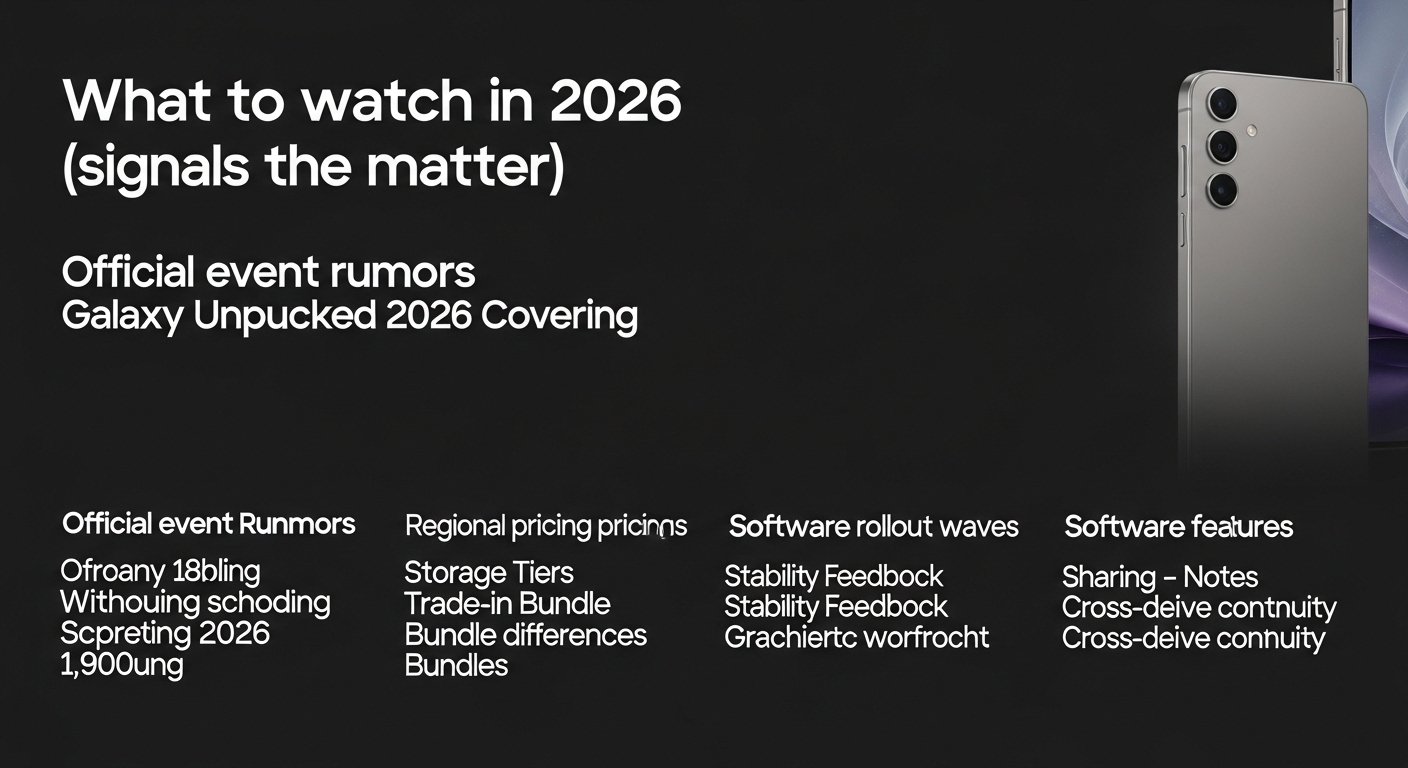
- Official event announcements, including Galaxy Unpacked 2026 coverage.
- Regional pricing signals: storage tiers, trade-in values, and bundle differences.
- Software rollout waves: stability feedback on specific models.
- Ecosystem features that impact daily workflow: sharing, notes, calls, and cross-device continuity.
Read more (Phone Expertise)
Read more on Phone Expertise: Best Samsung phones to buy in 2026.
Explore related coverage: Samsung Galaxy A series 2026 lineup explained.
Further analysis available here: Galaxy S26 vs S25: what really changed?.
FAQ
What is Samsung’s Galaxy roadmap for 2026?
Samsung’s 2026 Galaxy roadmap is expected to follow a wave-based pattern: early-year flagships, mid-range refreshes, mid-year foldables, and late-year updates and deal periods.
Which Samsung phone line matters most in 2026?
The Galaxy S line typically defines Samsung’s top-tier experience, while the Galaxy A line drives value for mainstream buyers. Foldables matter most for productivity and large-screen workflows.
Is it better to buy at launch or wait for discounts?
Launch periods suit buyers who want the newest features and early promotions. Discount periods suit buyers who want maximum value and are comfortable buying a model after prices stabilize.
Will One UI updates affect buying decisions in 2026?
Yes. Software support and feature availability increasingly shape how long a device stays enjoyable, especially as AI tools and privacy features become more central to daily use.
Are foldables worth buying in 2026?
Foldables make the most sense when the larger screen replaces part of a tablet workload or enables frequent multitasking. For buyers focused on battery and camera-for-money, slab flagships often remain the safer choice.