
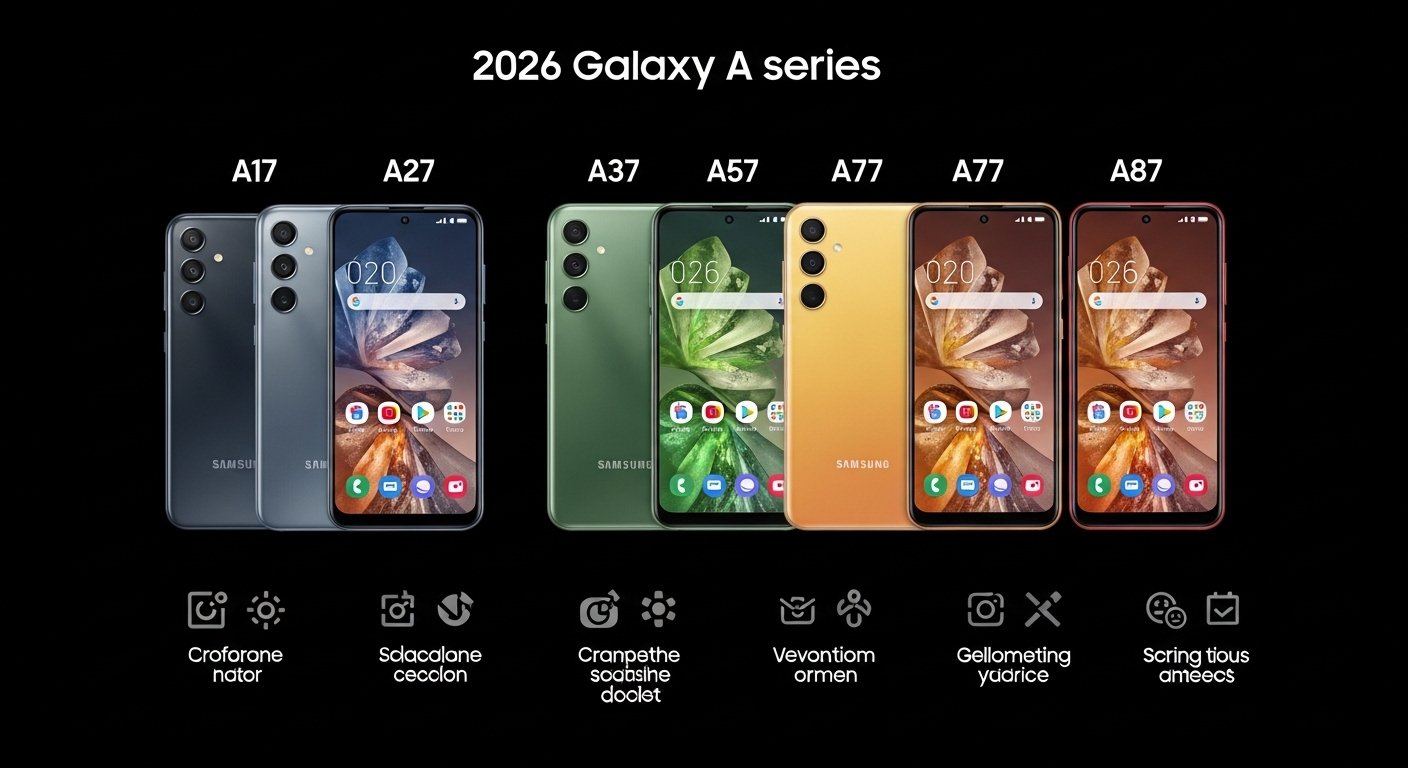
Samsung Galaxy A series: We’ll keep this practical, what the model numbers usually mean, which features are truly worth paying for in 2026 (display, updates, battery, camera stabilization), and which specs are mostly marketing noise. By the end, you’ll be able to look at a model name and instantly understand where it sits in the range.
How Samsung names Galaxy A phones
The name tells you two things: the tier (how “high” in the A range it is) and the generation. In general, a higher number means a more expensive phone with better hardware, but Samsung also uses regional variants and carrier configurations that can change storage, colors, and sometimes connectivity options.
Quick rule of thumb
If you remember only one thing, remember this: A0x/A1x are budget, A2x and A3x are mainstream mid-range, and A5x is the “premium mid-range” tier that tries to feel closest to a flagship. Samsung sometimes sells other A models too, but these families are the core of what most people see in stores.
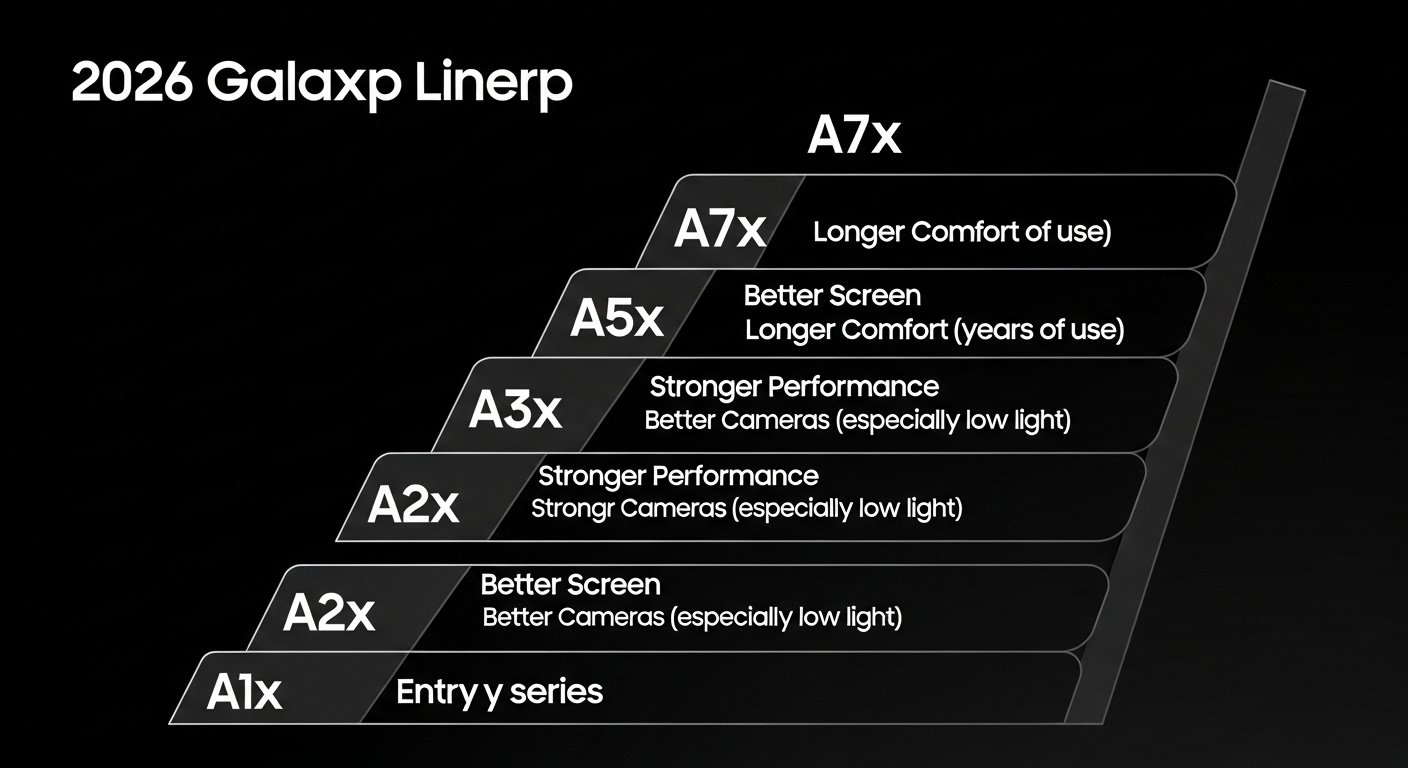
Samsung Galaxy A lineup (2026) tiers explained
The Samsung Galaxy A lineup typically makes sense when you view it as a ladder. Each step up usually buys you a better screen, stronger performance, better cameras (especially in low light), and longer “comfort” over a few years of use.
Galaxy A0x: the essentials tier
The A0x models are built for affordability. They’re designed for calls, messaging, social apps, and basic browsing, with large screens and big batteries that look great on paper. The trade-off is that performance can slow down faster over time, cameras struggle in low light, and the overall feel is more “functional” than “premium.”
Who it’s for in 2026: a first smartphone, a backup device, or a simple everyday phone if your usage is light and you don’t care about demanding games, heavy multitasking, or advanced camera features.
Galaxy A1x: budget with better balance
The A1x tier is often the sweet spot for buyers who want a new phone with modern basics but don’t want to spend mid-range money. You generally get better screens and smoother everyday use than the cheapest A models, and you often see more attention to software support and practical features.
Who it’s for in 2026: students, casual users, and anyone who wants a reliable phone for messaging, video, navigation, and social media without paying for premium cameras or top-tier chipsets.
Galaxy A2x: mainstream value (often the smartest buy)
The A2x tier is where Galaxy A phones start to feel “confident” in daily use. This is the level where you can expect a smoother experience for typical apps, better display behavior, and more consistent cameras in daylight. For many people, this is the best value tier because it avoids the biggest budget compromises without jumping into higher prices.
Who it’s for in 2026: most people who want a dependable phone for two to three years, especially if you don’t need flagship-level zoom or top-end gaming performance.
Galaxy A3x: the mid-range all-rounder
The A3x tier is usually the “I want a nicer phone, but not a flagship” category. This is where you typically see more premium screen quality, smoother scrolling, better camera consistency, and a more refined build. If you do a lot of photos, video calls, and media consumption, A3x models often feel like a major step up from entry tiers.
Who it’s for in 2026: buyers who want a well-rounded phone that looks and feels modern, with fewer compromises in screen and camera experience.
Galaxy A5x: premium mid-range (closest to flagship vibes)
The A5x tier is Samsung’s premium mid-range. In most years, this is where you get the most “complete” Galaxy A experience: stronger performance, better materials, more refined camera processing, and more confidence in long-term daily use. It’s also the tier that often competes directly with “flagship killer” phones from other brands.
Who it’s for in 2026: people who want a phone they can keep longer, who use their camera a lot, and who want a smoother overall feel without paying Ultra-level money.
What typically changes year to year
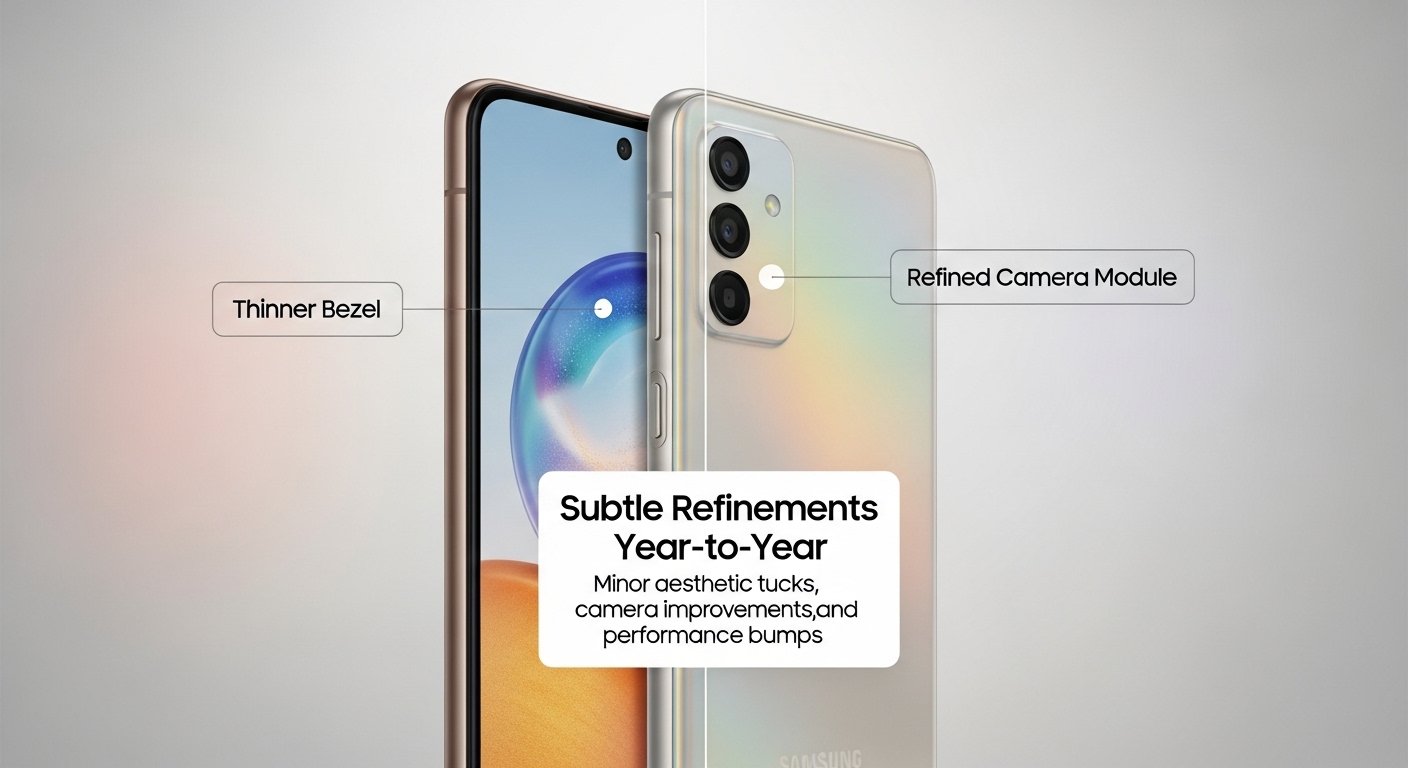
The Galaxy A series rarely reinvents itself each year. Instead, Samsung tends to refine what already works and push a few meaningful upgrades down the lineup. Understanding these patterns helps you decide whether to buy now, wait for the next A generation, or grab a discounted previous model.
Display experience
Display improvements often show up as smoother scrolling, better outdoor visibility, and fewer compromises in color and brightness at lower settings. In 2026, the “good enough” baseline is higher than ever, so the real difference is the quality of the experience, not just the screen size.
Performance and efficiency
Newer chips don’t always feel faster in quick tasks, but they can feel much better in three areas: keeping the phone cool, holding performance in longer gaming sessions, and reducing battery drain on mobile data. If you’re upgrading from an older phone, the efficiency gains can feel bigger than the speed gains.
Camera processing (the invisible upgrade)
Mid-range cameras can improve dramatically without changing the megapixel number. Samsung can deliver better photos through faster capture, better HDR balance, cleaner night processing, and improved stabilization. This matters most for indoor shots, moving subjects, and mixed lighting at night.
Software and update support
In 2026, software support is part of the product. A phone that gets security patches and stable feature updates for longer is often a better buy than a slightly faster phone with shorter support. When choosing between tiers, update policy and overall One UI stability should be part of the decision, not an afterthought.
How to choose the right Galaxy A model in 2026
The best Galaxy A phone is the one that matches your usage. Don’t choose based on one “hero spec” like megapixels or battery capacity. Choose based on the features that directly affect your daily comfort.
Pick based on your real priority.s
- For smooth scrolling and media: prioritize a better display tier, not just screen size.
- For gaming and multitasking: prioritize the chipset tier and RAM, and look for stable performance, not peak benchmarks.
- For photos of people and pets: prioritize camera consistency and stabilization over megapixel marketing.
- For long ownership: prioritize software support, storage, and battery health behavior.
Storage: the most overlooked upgrade
Storage pressure is a slow problem. A phone can feel “perfect” for three months and then become annoying as apps expand, photos pile up, and the system takes more space. If you plan to keep your phone for years, choosing more storage upfront often delivers more real value than chasing a slightly faster chip.
Battery: look beyond the number
Many Galaxy A phones advertise big battery capacities, but real endurance depends on efficiency, signal quality, and screen behavior. If you use mobile data heavily or live in a weak coverage area, the better “tier” can sometimes last longer even with a similar battery number because the modem and tuning are more efficient.
Common buying mistakes (and how to avoid them)
Most people don’t buy the “wrong” phone because theignoreed specs. They bought the wrong phone because they focused on the wrong specs. Here are the mistakes that cause regret in mid-range shopping.
Mistake 1: Paying for camera megapixels instead of camera reliability
Megapixels don’t guarantee better photos. What matters is how fast the phone captures, how it handles HDR, and how stable it is in low light. If photography matters, prioritize the tier that consistently delivers good shots across indoor and outdoor scenes.
Mistake 2: Buying the cheapest model and expecting it to age like a mid-range phone
Budget models can be great, but they tend to feel slower sooner as apps get heavier. If you keep phones for a long time, it’s often cheaper to buy one tier up once than to replace a budget phone sooner.
Mistake 3: Ignoring update support
Software support affects security, stability, and long-term usability. If you use your phone for banking, work, and personal data, update support should be a core decision factor.
Which Galaxy A tier should you buy?
If you want a simple recommendation without overthinking, use this tier-based shortcut. It won’t fit every edge case, but it will be right for most buyers.
Best for the lowest price
Choose A0x or A1x if your usage is light and you mainly want a modern screen, big battery life, and basic reliability. This is also the tier where discounts can be most aggressive, making it attractive for a second phone.
Best value for most people
Choose A2x or A3x if you want a phone that stays enjoyable longer, feels smoother, and takes more consistent photos. This is usually where you get the best “everyday performance per dollar.”
Best overall Galaxy A experience
Choose A5x if you want the most premium feel and the fewest compromises while staying below flagship pricing. If you don’t want to think about upgrades for a long time, this is often the safest tier.
How to time your purchase in 2026
Timing matters almost as much as tier choice. Galaxy A models often see price drops, bundles, and trade-in campaigns that can make a higher tier suddenly affordable.
Buy at launch if you want the newest software and longest runway
Launching early can be smart if Samsung offers meaningful bundles like extra storage, accessories, or introductory pricing. It’s also when you get the longest “freshness” period before the next refresh cycle begins.
Buy a previous generation if you want maximum value
If the new generation brings only minor upgrades, last year’s A model can be the better buy at a discount. This is especially true for A3x and A5x tiers, which often remain strong for several years.
Related Articles
Galaxy S26 vs S25: what really changed?
FAQ
What does “Galaxy A” mean in Samsung phones?
Galaxy A is Samsung’s mainstream, affordable-to-mid-range phone family. It’s meant to deliver core Galaxy features at lower prices than the S series, with multiple tiers to fit different budgets and needs.
Which Galaxy A series is best in 2026?
There isn’t one “best” for everyone. If you want the best overall A-series experience with fewer compromises, the A5x tier is usually the safest choice; for value, A2x/A3x tiers tend to offer the best balance.
Is it worth paying more for an A5x model?
It’s worth it if you care about smoother long-term performance, a more premium feel, and better camera consistency. If you use your phone heavily and keep it for years, the higher tier often ends up being the better value.
How do I choose between A2x and A3x?
Choose A2x if you want the best value and your needs are mainly everyday apps, social, and casual photos. Choose A3x if you want a noticeably nicer screen and more consistent camera performance, especially indoors and at night.
Should I wait for the 2026 Galaxy A models or buy now?
Wait if you want the newest generation, a longer software runway, and you’re not in a hurry. Buy now if you find a strong discount on a current model that already meets your needs—mid-range value often peaks after price drops.
