
HyperOS updates explained: what changed, what matters in 2026, and how Xiaomi’s rollout really works.
HyperOS is Xiaomi’s software platform that replaced MIUI as the company’s “one system” layer across phones, tablets, TVs, and wearables. The important point in 2026 is that HyperOS updates now behave more like a product roadmap than a simple skin refresh. They include performance tuning, new cross-device experiences, AI tools, and a clearer (though still model-dependent) update timeline.
The two versions most people care about are HyperOS 2 (built on Android 15 for many devices) and HyperOS 3 (Android 16-based), because HyperOS 3 is where Xiaomi tied major UI changes, AI utilities, and broader rollout scheduling into one public plan.
This guide breaks down what HyperOS actually is, what’s new, how the rollout timeline works, and how to decide whether to update immediately or wait.
What HyperOS is (in one minute)
HyperOS is Xiaomi’s system layer designed to unify software across Xiaomi, Redmi, and POCO devices, plus connected products. The key idea is consistency: shared design language, shared services, and shared performance optimizations across device categories.
In practice, HyperOS is still Android on phones. The “HyperOS version number” usually maps to Xiaomi’s feature layer, while the Android version (15 or 16) determines the underlying platform capabilities.
HyperOS 2 vs HyperOS 3: the difference in 2026
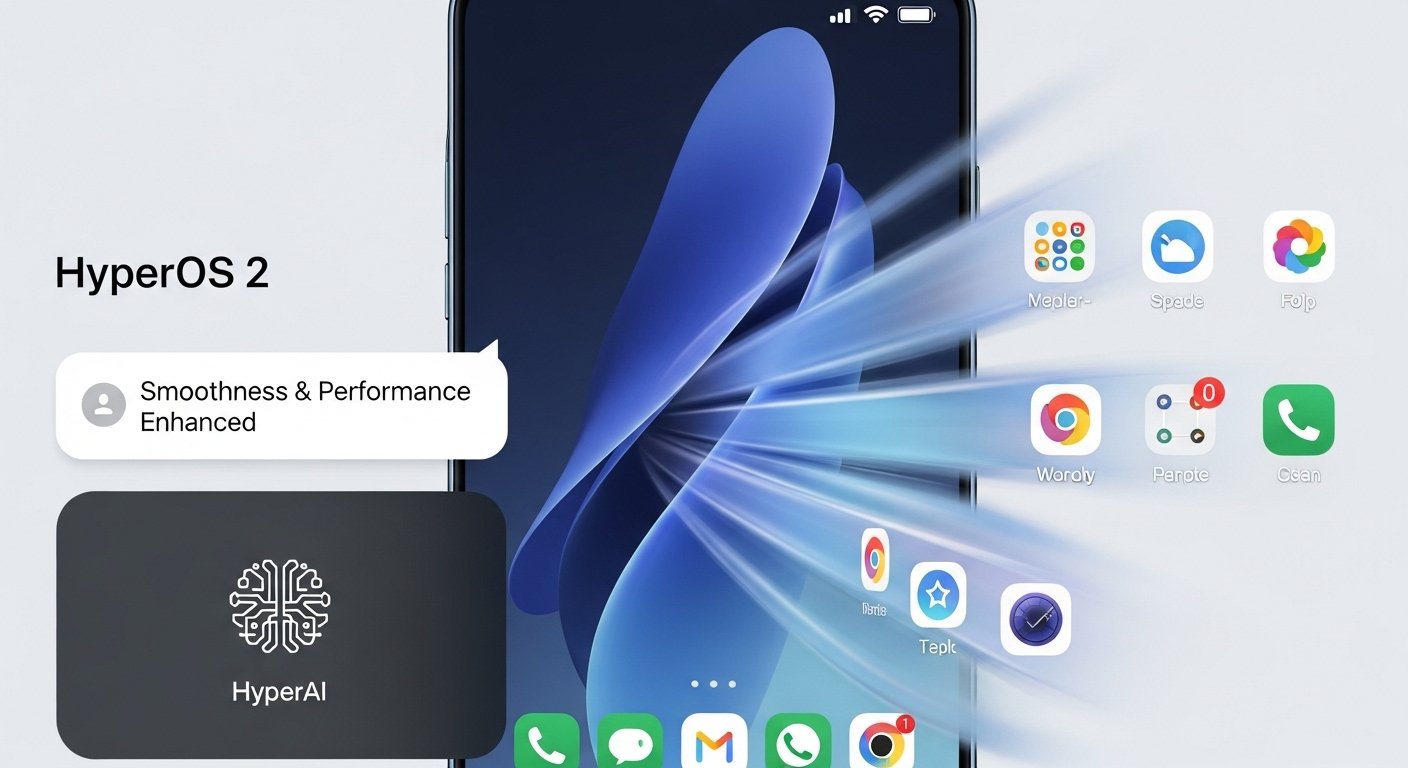
HyperOS 2 focused on smoothness, animations, and system-level performance, plus early “HyperAI” features. HyperOS 3 is the bigger platform moment because it aligns with Android 16 and comes with a published schedule and a larger set of system features.
HyperOS 2: what it improved
Coverage of HyperOS 2 highlights three themes:
-
Performance and smoothness: FoneArena reports Xiaomi claimed reduced app launch delays (up to 54.9%) and fewer frame-rate drops in gaming (13.2%).
-
HyperAI features: FoneArena lists AI translation, AI anti-fraud protections, and AI-generated visual effects such as cinematic depth wallpapers.
-
UI refresh: India Today describes a revamped UI and a “3D real-time weather system,” plus AI-backed security features like scam call detection and deepfake alerts.
The takeaway: HyperOS 2 is the update that makes many Xiaomi phones feel faster and more modern, even if the device hardware stays the same.
HyperOS 3 (Android 16): why it matters more
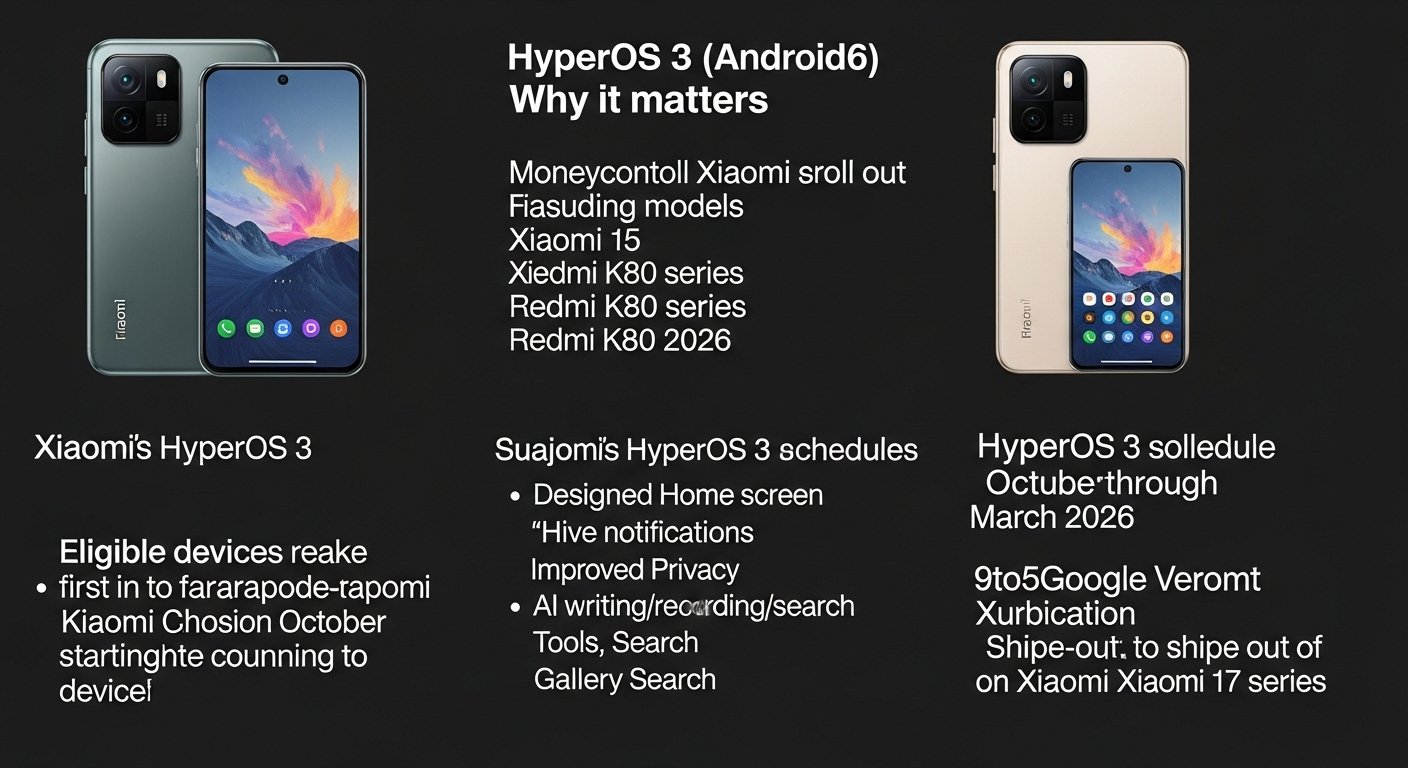
HyperOS 3 is Xiaomi’s Android 16-based update, and Xiaomi publicly outlined its rollout schedule and eligible-device list in multiple reports. Moneycontrol reports Xiaomi said HyperOS 3 will roll out first to flagship models (including Xiaomi 15 and Redmi K80 series) starting in October, with wider device coverage continuing into early 2026.
9to5Google summarizes Xiaomi’s HyperOS 3 rollout schedule as starting in October and continuing through March 2026, and it lists major feature themes such as redesigned home screen, “Hyper Island” for live notifications, improved privacy, AI writing/recording/search tools, and gallery search improvements. This is also the version reported to ship out of the box on the Xiaomi 17 series.
9 HyperOS features that are actually useful in 2026
The best HyperOS features are the ones that reduce friction daily. Here are nine, based on reports that outline specific HyperOS 2 and HyperOS 3 additions.
-
Faster app launches and reduced stutters (HyperOS 2).
-
Gaming stability improvements (less frame-rate drop) (HyperOS 2).
-
AI translation and real-time subtitles (HyperOS 2).
-
AI anti-fraud protections and scam/deepfake detection (HyperOS 2).
-
Redesigned home screen and smoother navigation (HyperOS 3).
-
Hyper Island live notifications / live activities (HyperOS 3).
-
AI writing and recording tools (HyperOS 3).
-
Gallery “smarter search” and content discovery (HyperOS 3).
-
Improved privacy controls and system-level refinements (HyperOS 3).
Depending onthe device and region, not every feature appears in the same form. Xiaomi’s rollout often ships “core” features broadly, and then enables advanced AI or connectivity features on specific models first.
HyperOS 3 rollout timeline: what “through March 2026” means
Xiaomi’s rollout is phased. The key idea is that Xiaomi pushes updates to the newest flagships first, then recent foldables/tablets, then older flagships and larger Redmi/POCO families afterward.
Moneycontrol reports:
-
Rollout begins in October (first wave includes Xiaomi 15 Ultra/15 Pro/15 and Redmi K80 series).
-
Additional devices (foldables like Mix Flip 2, tablets, TVs, and wearables) follow on October 31.
-
Xiaomi 14 series and Mix Fold 4/Mix Flip follow on November 15.
-
Older devices (including Xiaomi 13 series) are targeted before year-end, with some models continuing into January 2026 and beyond.
9to5Google states Xiaomi’s schedule runs through March 2026 and “could vary with time,” which is a realistic warning: Xiaomi often adjusts schedules based on bugs, regional certification, and carrier requirements.
Update support policy: how long Xiaomi phones get HyperOS updates
Update commitments vary by model line, and Xiaomi has been expanding longer support to more devices. Huawei Central reports Xiaomi has moved toward “6 years of security rollouts” for selected devices (including some Redmi and POCO models) and notes that “6 years” often refers to security patches, while major Android upgrades may remain fewer.
Huawei Central also claims some devices (such as Redmi Note 14 4G) may receive “four major HyperOS builds” plus extended security patches into 2031, though it notes Xiaomi’s policies are not uniform across all models.
For buyers, the best approach in 2026 is to check a device’s exact update promise before purchase, because “Xiaomi phone” does not equal “same update policy.”
Should you update immediately?
Update now if:
-
Your phone is in the first rollout wave, and Xiaomi has issued a stable build (not just a beta).
-
You care about security and anti-fraud protections that may be enhanced in newer builds.
Wait a bit if:
-
Your phone is ooldr and you rely on one or two critical apps (banking, work authentication), because early builds can bring bugs for specific models.
-
Your device is late in the schedule (January–March 2026), because later builds tend to be more stable after earlier waves surface issues.
External source for ongoing availability: Xiaomi’s official community HyperOS Update Tracker is designed to show which devices have received updates. https://new.c.mi.com/global/post/690091
Read Related Article
Xiaomi battery technology 2026
FAQ
Is HyperOS 3 the same as Android 16?
HyperOS 3 is Xiaomi’s Android 16-based software layer; it includes Xiaomi’s UI and features on top of Android 16.
When will my Xiaomi phone get HyperOS 3?
Xiaomi’s rollout is phased. Reports summarize the schedule as starting in October and continuing through March 2026, depending on model and region.
What are the biggest HyperOS 3 features?
9to5Google lists a redesigned home screen, Hyper Island live notifications, improved privacy, AI writing/recording/search tools, and Gallery search improvements.
Did HyperOS 2 improve performance?
Yes. FoneArena reports Xiaomi claimed up to 54.9% reduced app launch delay and a 13.2% cut in frame drops during gaming on supported devices.
How long will Xiaomi support HyperOS updates?
Support varies by model. Huawei Central reports Xiaomi has expanded longer security support (up to six years) for selected Redmi and POCO devices, while major OS upgrade counts can still differ by device.