

Xiaomi battery technology 2026: 7 massive breakthroughs (silicon‑carbon, 8,000mAh rumors, and HyperCharge)
Xiaomi’s battery story in 2026 is not just “bigger numbers.” It is a combination of higher energy density (silicon‑carbon), smarter charging, and a race among Chinese brands to ship phones that last far longer than a day. Les Numériques describes 2026 as a year where battery capacity is becoming a key battleground, driven partly by rising component costs and intense competition on autonomy.
For Xiaomi, the headline is that silicon‑carbon enables larger capacities without making phones absurdly thick. Les Numériques reports Xiaomi is preparing a Redmi Note 15 Pro 5G for Europe with a 6,580mAh battery, and it also mentions a separate rumor of an 8,000mAh Snapdragon 8 Elite phone using 18% silicon. This is the context for why Xiaomi’s battery tech matters: Xiaomi is trying to make “two-day phones” normal in mainstream price tiers.
Below are the 7 battery technology themes shaping Xiaomi phones in 2026, explained in practical terms.
1) Silicon‑carbon batteries: the real reason capacities are jumping
Silicon‑carbon is the enabling technology behind many of the giant battery leaks. Les Numériques explains that increasing silicon‑carbon usage raises energy density, allowing batteries to store more energy at the same physical size (or keep the same capacity in a smaller format).
That matters because it changes the old trade‑off:
-
A bigger battery used to mean a thicker phone.
-
In 2026, a bigger battery can often mean “similar thickness, longer runtime.”
It also helps Xiaomi scale the benefit into Redmi and midrange devices instead of reserving it only for Ultras.
2) “Monstrous autonomy” phones: 6,580mAh and 8,000mAh are now plausible
Les Numériques reports Xiaomi is preparing to sell a Redmi Note 15 Pro 5G in Europe with a 6,580mAh battery. The same report says rumors point to an even more extreme phone in the Xiaomi 17 series with an 8,000mAh battery and 18% silicon content, paired with a 6.9‑inch display and Snapdragon 8 Elite.
This is important for buyers because:
-
6,500mAh+ is no longer limited to niche rugged phones.
-
The “two-day phone” is increasingly realistic for typical usage (social, video, browsing).
The caution: bigger batteries also require better thermal control and charging management to maintain long‑term health.
3) HyperCharge: fast charging is now an ecosystem, not a single watt number
HyperCharge is Xiaomi’s fast-charging branding, but in 2026, it’s best understood as a combination of charger, cable, phone-side power management, and safety layers. Xiaomi’s official specs for the Xiaomi 120W HyperCharge Combo (Type‑A) list a 120W max output with “smart protection,” “more compatibility,” and “safety and security.”
The official spec page also lists:
-
Input: 100–240V, 50/60Hz, 3A.
-
Operating temperature: -10°C to 40°C.
-
Dimensions: 56.1 × 77.2 × 28.8mm (excluding prongs).
-
Net weight: 170g.
That matters because fast charging in 2026 is as much about:
-
Stable power delivery.
-
Temperature constraints.
-
Safe output profiles across different devices.
4) Fast charging gets more “realistic” in messaging (expect variability)
Xiaomi’s official 120W charger page includes a crucial note: charging speeds vary depending on device usage, conditions, and other factors. This is an important buyer expectation, especially as batteries get larger.
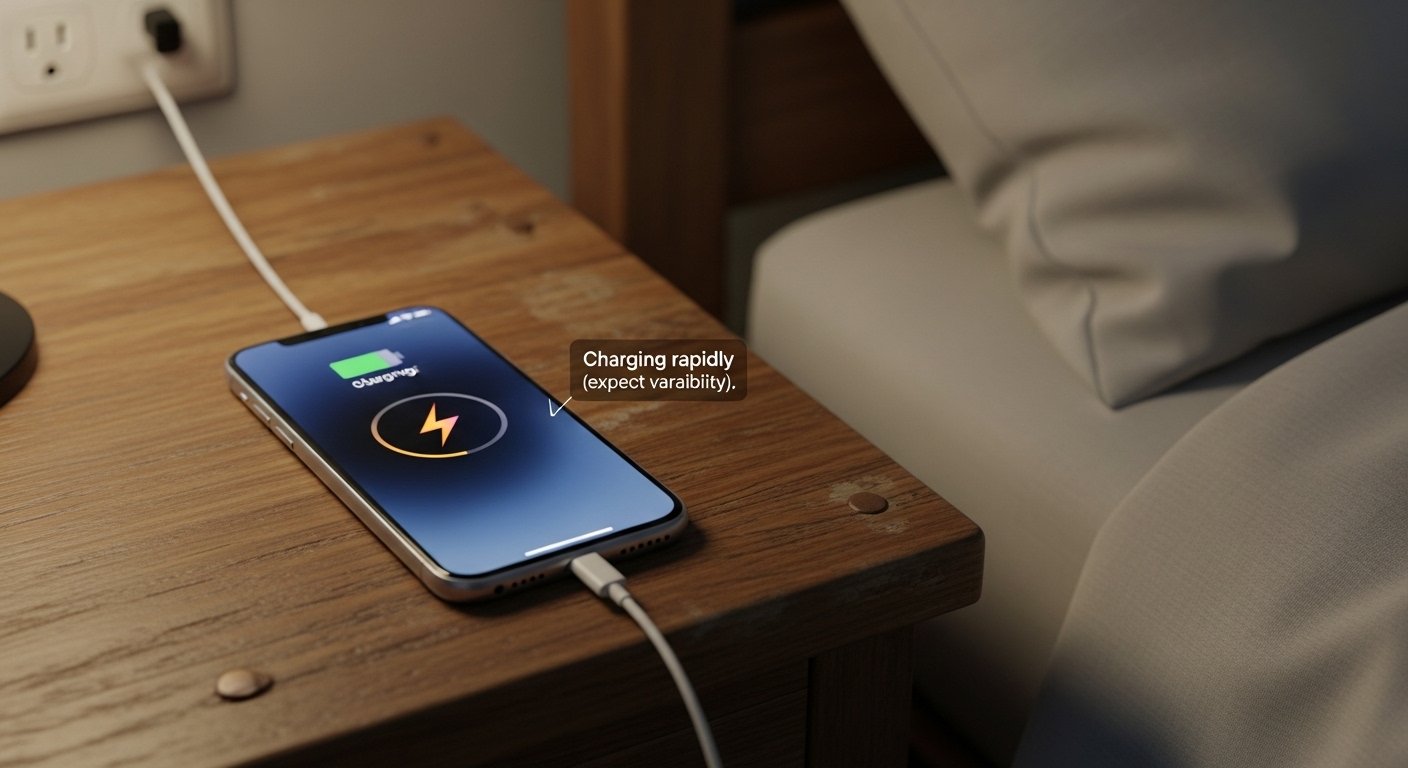
Practical implication:
-
A 120W charger does not guarantee “full in 15 minutes” for every phone.
-
Real speed depends on battery size, battery temperature, and the charging curve designed to protect longevity.
In 2026, the best outcome is not the highest peak wattage, but fast top‑ups that do not degrade the battery quickly.
5) Battery tech is moving into accessories (magnetic packs, thin power banks)
Battery life is no longer only “inside the phone.” Xiaomi’s accessory ecosystem is also evolving, including magnetic battery products designed to be thinner and more portable. 9to5Google notes Xiaomi released a razor-thin magnetic battery, though it suggests it is “probably not Qi2.”
Why this matters:
-
More users can carry a slim backup pack instead of relying only on huge internal batteries.
-
Magnetic accessories can improve convenience, even if charging standards and speed vary.
6) Solid‑state battery patents: Xiaomi is thinking beyond phones
Xiaomi’s battery ambitions extend into EV tech, which can influence material science and long-term R&D. Electrive reports that Xiaomi registered a patent for a solid-state battery for its electric cars, describing a layered electrode structure to improve ion conductivity and energy density.
Electrive’s report also states:
-
The solid-state battery is said to enable over 1,200 km range (CLTC) and 800 km charging in 10 minutes.
-
Xiaomi says the prototype supports a Cell-to-Body (CTB) design with 77.8% volume efficiency and is compatible with existing lithium battery production lines.
This does not mean “solid-state phones next year.” It does mean Xiaomi is investing in deeper battery tech, which can later filter into consumer electronics over time.
7) The competitive pressure: Xiaomi can’t stay at “one day” endurance
Les Numériques frames the broader market reality: Chinese manufacturers are competing aggressively on battery size, and it cites examples like Honor launching a phone in China with a 10,080mAh battery at under 8mm thickness, and OnePlus following with 9,000mAh devices.
The implication for Xiaomi buyers in 2026:
-
Xiaomi will keep pushing battery capacity up across more price tiers.
-
The “battery champion” in Xiaomi’s lineup could shift quickly as Redmi, Poco, and Xiaomi-number series all adopt higher-density cells.
Read Related Article
Xiaomi 16 Pro: specs and release date
Xiaomi 16 vs Xiaomi 15 comparison
FAQ
What is Xiaomi’s main battery innovation in 2026?
Silicon‑carbon battery chemistry is the key enabler, because it increases energy density and helps Xiaomi ship higher capacities without dramatic size increases.
Is Xiaomi really bringing 6,580mAh batteries to Europe?
Les Numériques reports Xiaomi is preparing a Redmi Note 15 Pro 5G for Europe with a 6,580mAh battery.
Are 8,000mAh Xiaomi flagships real?
Les Numériques mentions a rumor of an 8,000mAh Snapdragon 8 Elite phone using 18% silicon, but this remains unconfirmed until Xiaomi announces it.
What is the Xiaomi 120W HyperCharge Combo’s official max output?
Xiaomi’s official spec page lists 120W max output, with smart protection and stated operating temperature and electrical input specs.
Does Xiaomi’s solid‑state battery patent mean phones will get solid‑statebatteries soon?
Not directly. Electrive reports the patent is focused on EV batteries, but it signals Xiaomi’s deeper investment into next‑generation battery research.