
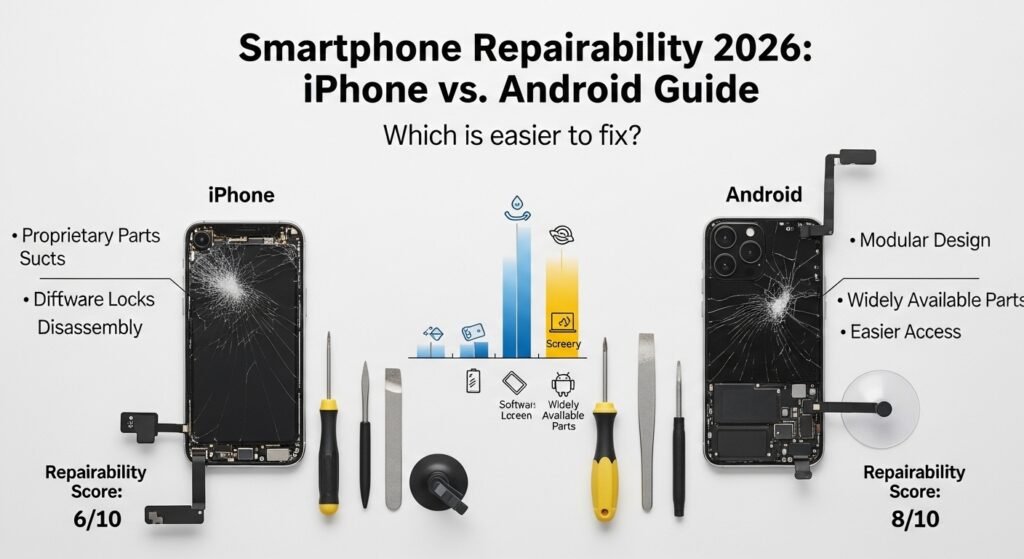
Smartphone repairability 2026: iPhone vs Android, EU right‑to‑repair rules, and what changed this year
Smartphone repairability in 2026 is improving, but it’s also becoming more complicated. Hardware is getting easier in some places (like batteries and access design), while software restrictions (like part pairing and calibration) still limit independent repair in many cases. The EU’s new rules, starting June 20, 202,5 also changed the market by requiring minimum repairability standards, longer spare-part availability, and longer software support after a device is withdrawn.
The key takeaway: in 2026, “repairable” means more than opening the phone. It includes whether parts are available for years, whether the OS accepts replaced parts, and whether repairs require special tools or manufacturer software. Right-to-repair policy and teardown evidence give a clearer picture than brand stereotypes.
This guide explains what repairability means today, what the EU rules require, and how iPhone and Android compare in real repairs.
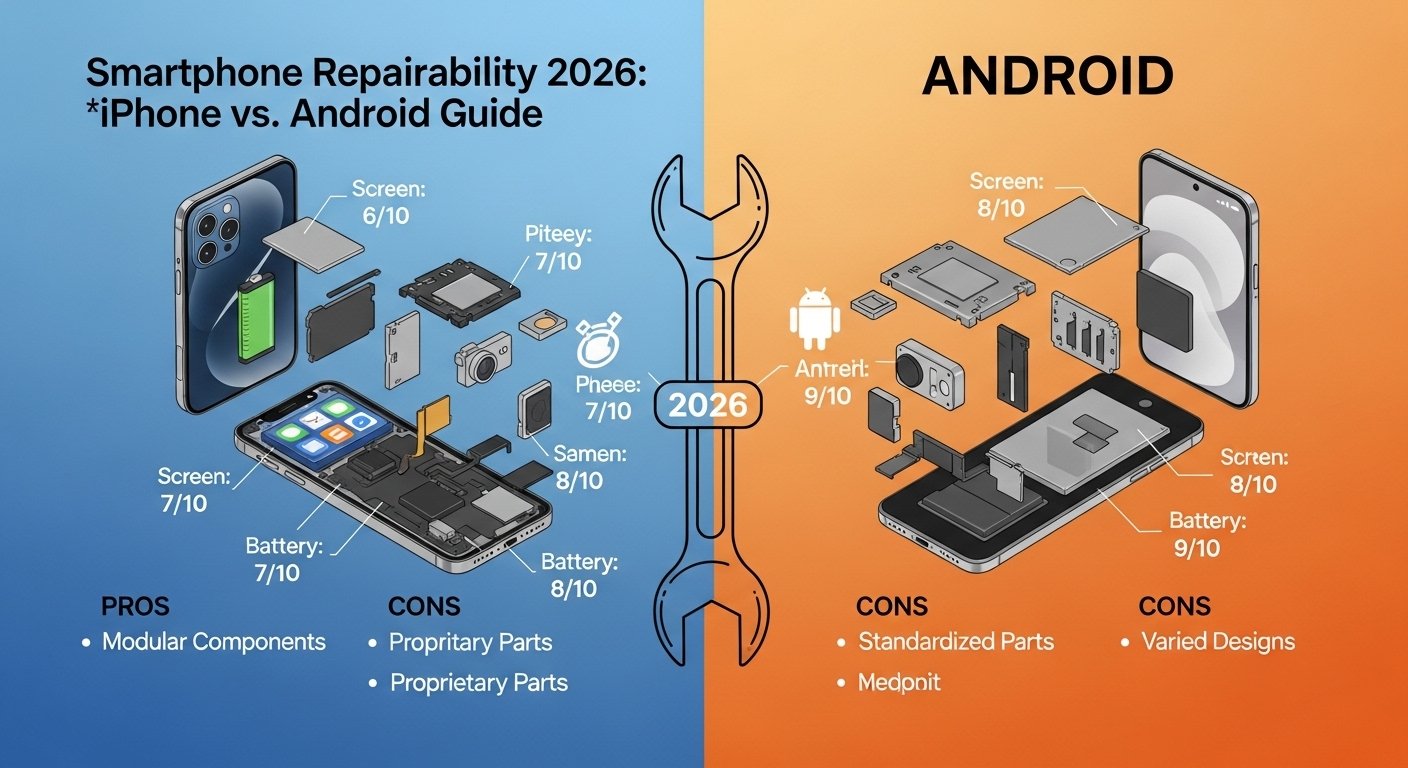
What “repairability” actually means in 2026
Repairability is a mix of four things:
-
How easilcan youan open the phone without breaking it?
-
How replaceable common parts are (battery, screen, USB port, and cameras).
-
Whether genuine parts are available at a reasonable cost for many years.
-
Whether the software allows a replaced part to work fully (no warnings, no disabled features).
Even if a phone is “easy to open,” it can still be hostile to repair if key components need pairing/calibration that only the manufacturer can do. EU right‑to‑repair advocates call part pairing one of the biggest gaps in regulations.
EU right‑to‑repair rules: what changed after June 2025
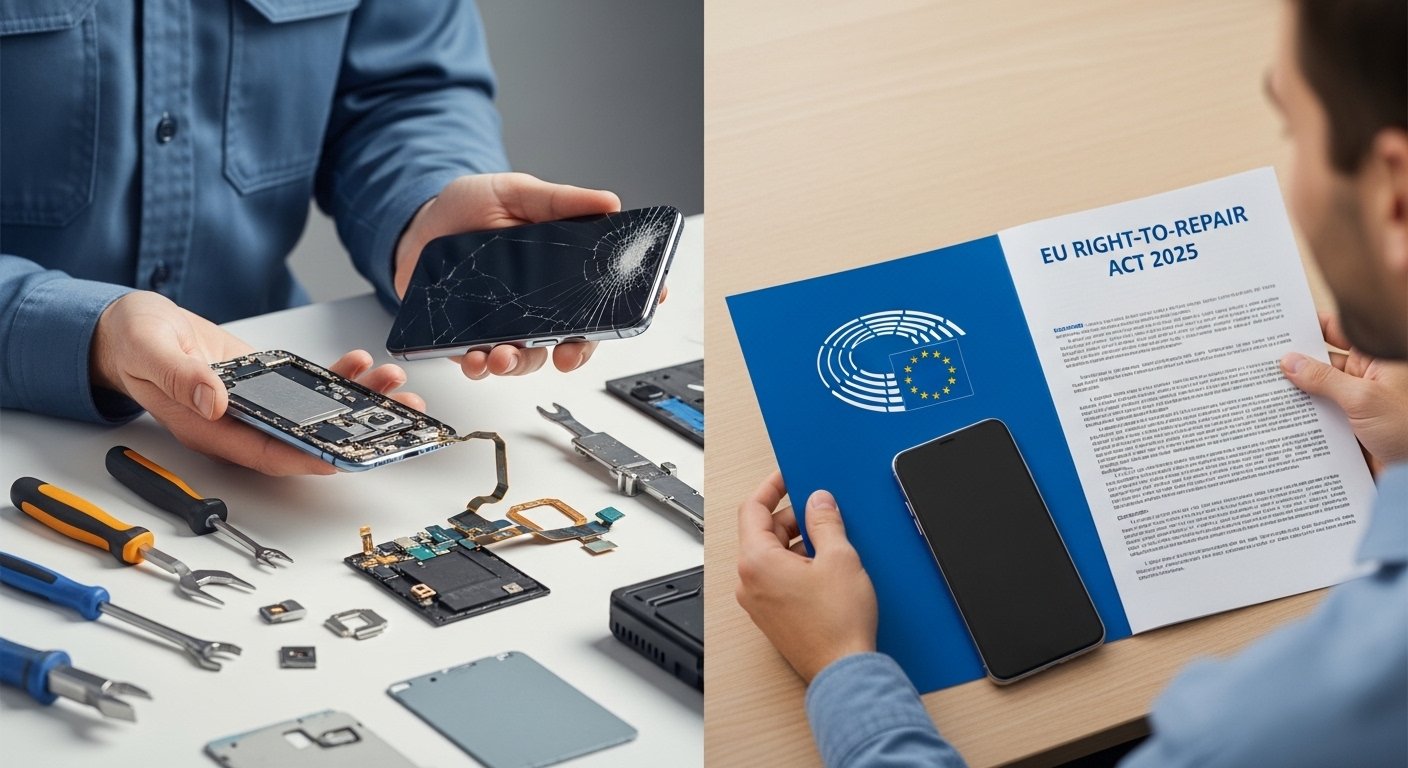
A detailed policy summary says that from June 20, 2025, EU legislation introduced minimum repairability requirements for smartphones and tablets. It mandates seven years of spare-part availability and at least five years of software updates after a device is withdrawn from the market.
The same summary says the EU also introduced a new label rating durability and repairability, and it includes durability targets like surviving 45 drops and batteries retaining 80% capacity after 800 cycles.
Two important limitations were highlighted:
-
The regulation did not ban part pairing, which can limit third-party repairs.
-
The final text no longer requires screens to be user-replaceable with basic tools; instead, screen replacement must be possible by professionals using commercial tools.
So the EU rules help, but they do not fully solve the “parts + software lock” problem.
iFixit repairability scores: the quickest way to compare phones
If you want an at-a-glance comparison, iFixit maintains a running list of repairability scores for current smartphones based on teardown analysis. iFixit describes its process as tearing down the latest phones and scoring repairability from 0 to 10.
This matters because:
-
Scores reflect real internal design choices (adhesives vs screws, modularity).
-
They often highlight what will be expensive or difficult 18 months later.
-
They’re more reliable than marketing claims like “durable” or “easy service.”
If repairability is a priority for your next purchase, iFixit’s score list is a practical shortlist tool.
iPhone repairability in 2026: what improved (iPhone 17 Pro example)
Recent iPhones have shown real movement toward a repair-friendly design. A teardown summary quoting iFixit’s Liz Chamberlain says the iPhone 17 Pro uses a screwed-in battery rather than adhesive strips, making battery replacement easier with basic tools.
That same teardown summary notes:
-
Apple has published repair manuals and promised parts availability for newer phones, signaling a broader shift.
-
iFixit gave a preliminary repairability score of 7/10 to both the iPhone 17 Pro and the thinner iPhone Air, and it attributes this to a dual-entry design and more replaceable components.
This doesn’t mean iPhones are “easy DIY phones.” It does mean Apple is trending toward more accessible battery service and more predictable official parts availability.
Android repairability in 2026: why it varies more
Android repairability is less consistent because every OEM has different priorities. Some brands are very repair-friendly; others use heavy glue, curved displays, or fragile internal layouts.
The EU repair rules push Android makers toward better spare-part availability and durability metrics in Europe. The regulation summary emphasizes multi-year spare parts and update requirements, which should gradually reduce “disposable” models.
However, many Android phones still differ widely in:
-
How easy is the screen to remove?
-
How modular the battery and USB port are.
-
Whether the phone uses part pairing and software checks.
So “Android is easier to repair” can be true for some models, but not as a universal rule.
Part pairing and software locks: the hidden repairability killer
Part pairing is when a phone requires software authorization to accept a replacement part. Right to Repair Europe, as quoted in the EU regulation summary, criticizes the EU regulation for not banning part pairing and says it can restrict the functionality of non-original components.
Why this matters:
-
A third‑party screen or camera can physically fit, but still lose True Tone, Face ID features, camera calibration, or battery health reporting.
-
Repair shops may need manufacturer software to complete a repair “properly.”
In 2026, this is the biggest reason a phone can score well in “hardware repairability” but still be frustrating to repair.
What to look for when buying a repair-friendly phone
Use this checklist:
-
iFixit repair score is high (aim 7/10 or above).
-
The battery can be replaced with screws or an accessible adhesive, not extreme glue.
-
OEM provides parts and manuals (official repair programs).
-
Long spare-part promise (EU requires 7 years in the EU market).
-
Update longevity (EU requires 5 years after withdrawal).
-
Minimal part pairing restrictions (hard to verify, but watch teardown reviews).
If you’re in the EU, the 2025 repair label is also worth checking at purchase time because it should provide a standardized durability/repairability signal.
Read Related Article
FAQ
Are iPhones easier to repair in 2026?
Some are improving. A teardown summary says iPhone 17 Pro uses a screwed-in battery, which is a meaningful improvement for battery repair compared to adhesive-heavy designs.
What do the EU right‑to‑repair rules require for phones?
A policy summary states the EU rules (from June 20, 2025) mandate seven years of spare parts availability and at least five years of software updates after a device is withdrawn from sale.
What is part pairing, and why does it matter?
Part pairing is a software technique that can limit functionality when non-original parts are used. The EU regulation summary says Right to Repair Europe criticized the rules for not banning part pairing.
What’s the best way to compare phone repairability quickly?
iFixit’s smartphone repairability scores list is designed for this; it tears down phones and scores them from 0 to 10.