
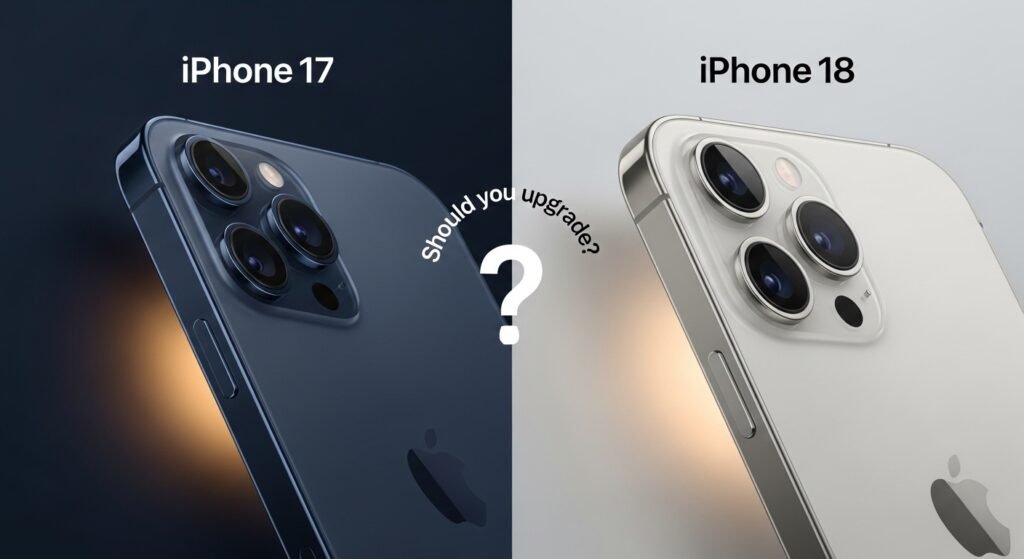
The decision behind iPhone 18 vs iPhone 17 is less about “newest equals best” and more about timing, priorities, and how the current phone is holding up. If iPhone 17 still feels fast, takes the photos needed, and lasts a full day, the practical case to upgrade is usually limited unless a must-have feature lands in the next generation.
For most buyers, the smartest approach is to compare what actually changes in daily use: camera reliability in indoor light, battery stability on mobile data, display comfort outdoors, and whether the next chip generation improves heat and performance consistency. Early iPhone 18 talk centers on efficiency-driven gains and potential Pro-focused design tweaks rather than a full redesign across the lineup.
Comparison table: what’s expected to change
Apple has not confirmed iPhone 18 details, so any iPhone 18 entries reflect early reporting and should be treated as provisional until launch.
| Category | iPhone 17 (current) | iPhone 18 (expected) | Real-world impact |
|---|---|---|---|
| Launch timing | Traditional fall availability | Split timing rumors; Pro-first talk persists | Waiting could mean longer gaps for base models; iPhone 17 discounts could extend. |
| Performance | Strong everyday speed | Next-gen chip improvements (efficiency + sustained performance) | Most noticeable during heavy camera use, gaming, and long navigation sessions. |
| Battery life | Depends heavily on battery health and usage | Efficiency-driven improvements are more likely than a dramatic capacity jump. | Potentially steadier endurance on mobile data and fewer heat-related drain spikes. |
| Cameras | Reliable baseline; Pro models lead | Rumored Pro camera control and sensor improvements; base changes may be modest. | Upgrades matter most for indoor motion, low light, and video stability. |
| Front design | Current Dynamic Island generation | Ongoing speculation about smaller cutouts on Pro models | Mostly a usability and “screen continuity” change, not a core feature shift. |
| Value | Likely better deals as new models approach | Higher MSRP risk if premium-first strategy expands | Many buyers get a better deal by buying the iPhone 17 late-cycle. |
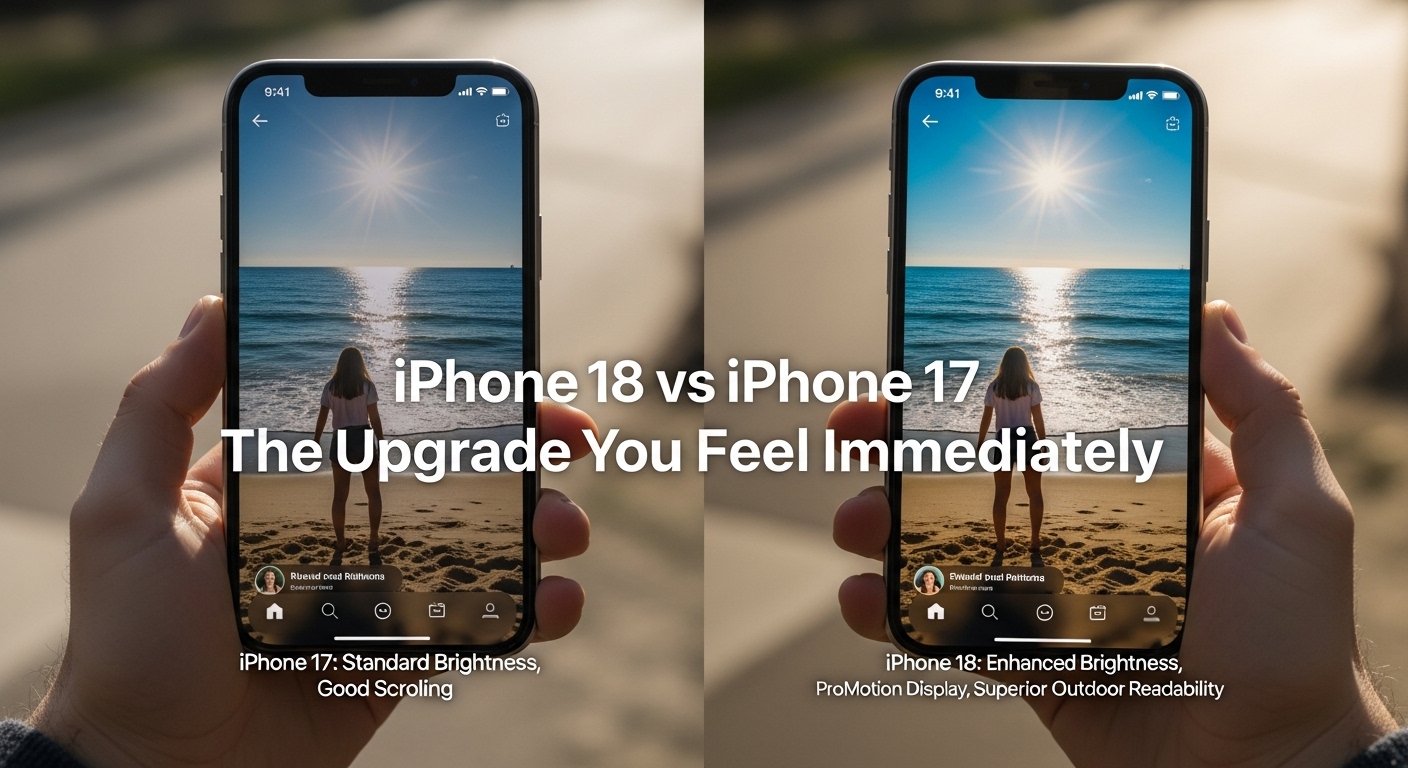
Design and display: the upgrade you feel immediately
Year-over-year iPhone upgrades rarely transform the physical experience unless size, weight, or screen behavior changes. For many owners, the most noticeable difference between generations is display comfort: brightness outdoors, smooth scrolling, and how well the phone stays readable in harsh lighting.
What to expect if design changes are Pro-focused
Early iPhone 18 reporting often concentrates on Pro models, including front design tweaks that may reduce the visible cutout area. If that happens, iPhone 17 owners who strongly dislike the current front layout may view iPhone 18 Pro as the more meaningful “design upgrade” than the base iPhone 18.
For non-Pro buyers, the practical design story is usually more conservative: similar feel, similar day-to-day ergonomics, and incremental refinements rather than a new look.
Performance and battery: where upgrades usually matter most
Performance on modern iPhones is rarely the reason to upgrade if the current phone runs smoothly. The real difference shows up under sustained load: long camera sessions, heavy app switching, extended video calls, and travel days that combine navigation, photos, and uploads.
Why an efficiency jump can feel bigger than a speed jump
A new chip generation that improves efficiency can deliver benefits even when apps already open quickly. Better efficiency usually means less heat, more stable performance over time, and more predictable battery drain—especially on 5G and in weak-signal environments.
That’s also why many upgrades feel “subtle but satisfying.” The phone doesn’t feel twice as fast, but it feels calmer: fewer hot moments, fewer unexpected drops, and fewer situations where battery percentage falls off a cliff late in the day.
When iPhone 17 owners actually feel a battery upgrade
Battery improvements matter most when iPhone 17 battery health is already declining. A healthy iPhone 17 can still deliver a strong day; a worn battery can make even a fast phone feel unreliable.
For many owners, the most cost-effective battery upgrade is also the simplest: a battery replacement. Upgrading to iPhone 18 becomes more compelling when battery issues combine with other needs, camera limitations, storage pressure, or a desire for a different size tier.
Cameras: the most common reason to upgrade
Camera improvements are the easiest upgrade to justify because they create better results immediately: sharper indoor photos, fewer blurred shots, steadier video, and more consistent color across lenses. For iPhone 17 owners, the key question is whether current photos are “good enough” or whether the camera misses moments often, especially indoors or at night.
What qualifies as a real camera upgrade
- Indoor motion: clearer photos of kids, pets, and moving subjects without retakes.
- Low light: less noise without turning texture into smudged detail.
- Video: steadier stabilization and more controlled exposure changes.
- Zoom consistency: sharper results at everyday ranges used for portraits and travel.
Early iPhone 18 coverage places significant emphasis on Pro-side camera improvements, including more control-oriented features and sensor pipeline upgrades. If iPhone 17 already delivers the desired results, the upgrade value is often limited unless the Pro camera changes are meaningful enough to affect daily shooting.
Storage, longevity, and the cost of waiting
For most people, storage pressure is the silent upgrade driver. A phone that constantly runs low on space becomes harder to update, slower to manage, and frustrating to use. If iPhone 17 is already near capacity, moving to a higher storage tier can be a bigger life improvement than any single new feature.
Waiting also carries a hidden cost: time spent dealing with annoyances. If iPhone 17 is struggling—battery wear, cracked glass, unreliable charging—waiting for iPhone 18 only makes sense when the current phone can be kept stable and safe without repeated repairs.
Pros and cons
Upgrading to iPhone 18: pros
-
- Potential efficiency and thermal gains, especially under heavy use.
-
- Best access to whatever Apple’s newest camera pipeline improvements deliver, particularly on Pro models.
-
- Longer runway for software support compared with keeping iPhone 17 for several more years.
- New lineup timing and promotions may create better trade-in value for iPhone 17.
Upgrading to iPhone 18: cons
-
- Uncertainty until launch; rumored features may not land as expected.
-
- Higher effective price risk if the fall window becomes more premium-heavy.
- Many improvements may be incremental for iPhone 17 owners who already have strong performance.
Keeping iPhone 17: pros
- Still a fast, modern iPhone for typical daily use.
- More predictable cost, especially if paired with a battery replacement.
- Late-cycle iPhone pricing and promotions can be stronger than launch pricing for new models.
Keeping iPhone 17: cons
- Battery health continues to decline with time and heat.
- Camera and low-light gaps become more noticeable as newer processing improves.
- Storage pressure and aging components can reduce reliability over long ownership.
Who should upgrade?
The upgrade decision is easiest when tied to a specific pain point. If iPhone 17 is still enjoyable and reliable, waiting for clearer confirmation of iPhone 18 changes is usually the rational move.
Upgrade makes sense when
-
- Battery health is noticeably degraded,d and daily endurance is no longer reliable.
- Indoor and night photos are frequently disappointing, especially with moving subjects.
- Heavy use is common (navigation, video calls, recording, editing), and heat or throttling is a recurring issue.
- Front design changes on iPhone 18 Pro models are a must-have priority.
Waiting makes sense when
-
- iPhone 17 is stable, smooth, and lasts the full day for typical use.
- Camera results are already satisfying, and most photos are taken in good light.
- Pricing and timing matter, and a split launch could delay the model tier that fits best.
Buying verdict
For most iPhone 17 owners, upgrading immediately to iPhone 18 is only clearly justified if battery wear, camera consistency, or heavy-use stability are already becoming daily annoyances. If iPhone 17 remains dependable, waiting for confirmed specs and real-world camera and battery testing is typically the smarter play.
For buyers who prioritize the newest camera pipeline and potential front design refinements, the iPhone 18 Pro tier is the more likely “meaningful upgrade” target than the base model—especially if the launch window is split and Pro models arrive first.
Where to Buy
Carrier promotions often deliver the lowest effective price through trade-in credits, but total plan cost matters as much as the phone price. Unlocked purchases offer more flexibility for switching carriers and traveling, and they make resale simpler.
For value-focused buyers, the strongest iPhone 17 deals typically appear as the next generation approaches and inventory clearing begins. For early adopters, launch windows can be worthwhile when trade-in boosts or storage promotions meaningfully reduce the real cost.
Related Articles
Read more on Phone Expertise: iPhone 18 Pro vs Pro Max comparison.
Explore related coverage: iPhone 18: release date and expected features.
Further analysis available here: Upcoming Samsung phones to watch.
FAQ
Is iPhone 18 expected to be a big upgrade over iPhone 17?
Most early reporting suggests iPhone 18 gains may be more about efficiency and refinement than a radical redesign, with some of the more notable changes discussed around Pro models.
When is iPhone 18 expected to launch?
Split launch reporting suggests Pro models in fall 2026 and base models later, but Apple has not confirmed timing.
Should iPhone 17 owners wait for iPhone 18 Pro instead of the base iPhone 18?
That can make sense when camera upgrades and front design changes are priorities, since early iPhone 18 coverage emphasizes Pro-tier changes more heavily than base-model changes.
What’s the most cost-effective alternative to upgrading from iPhone 17?
A battery replacement and a storage cleanup can extend iPhone 17’s useful life significantly, especially when performance is still stron,g and the main issue is endurance.
Does it make more sense to buy an iPhone 17 at a discount than wait?
Discounted iPhone 17 pricing can be the best value when the phone meets performance and camera needs, and the next generation is expected to be incremental or delayed for the preferred model tier.