
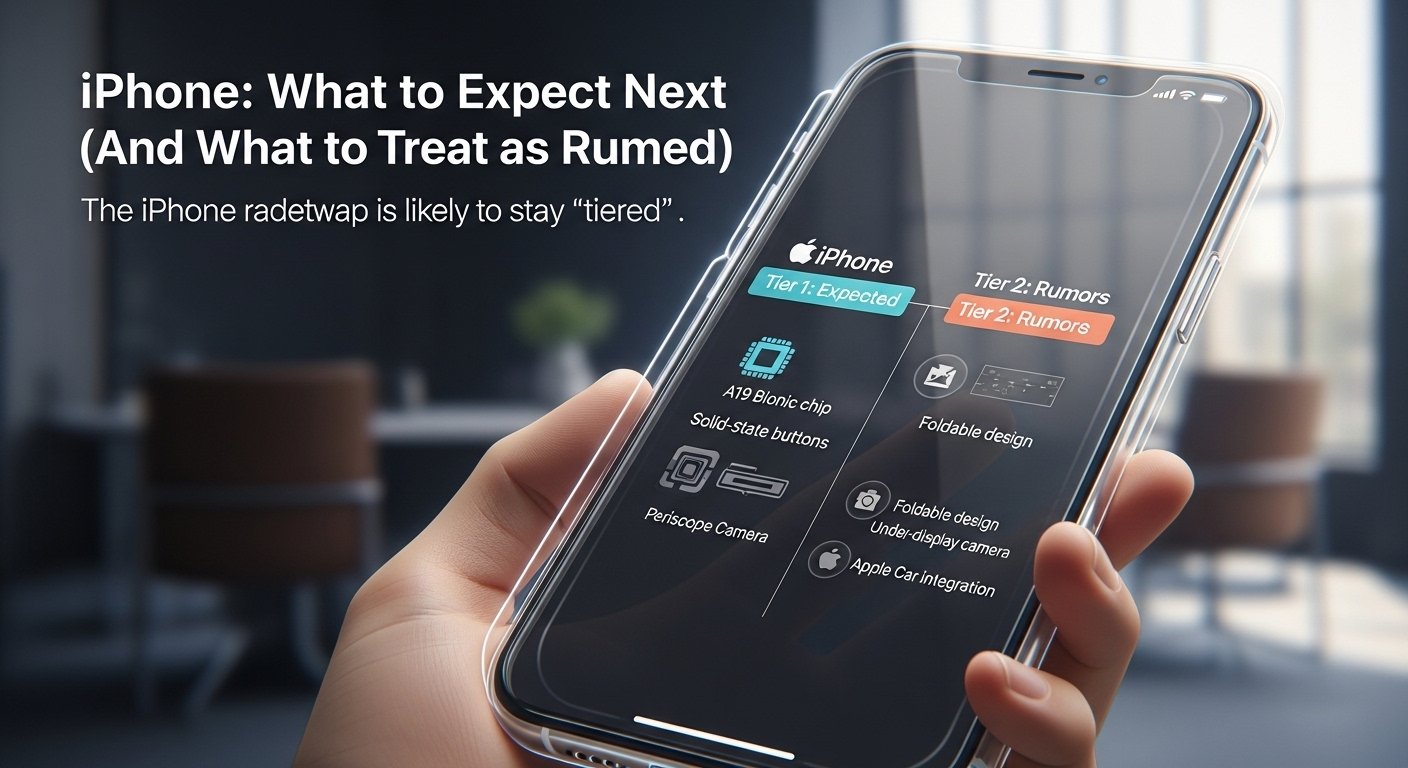
11 Essential (Good and Bad) iPhone 18 design rumors for 2026: what looks credible, what looks risky
The iPhone 18 design conversation in 2026 is being shaped by two forces at once: Apple’s recent shift toward “inside-out” design (where thermals, battery space, and camera systems drive the chassis) and a market that’s increasingly split between mainstream slabs and attention-grabbing form factors like foldables. Apple’s iPhone 17 Pro press release is a useful baseline for this era because it explicitly ties design decisions to sustained performance, heat dissipation, and battery packaging—exactly the kind of priorities that tend to carry forward across generations.
At the same time, “iPhone 18 design rumors” are exactly that—rumors. Some are plausible because they align with known constraints (camera module size, antenna performance, thermal needs), while others are fragile because they assume Apple will compromise durability, repairability, or Face ID reliability for aesthetics. Treating every leak as equal is the fastest way to overpay, upgrade too early, or expect a feature Apple never ships.
Below are 11 rumors and design themes circulating the iPhone 18 generation, framed in a way that’s useful for buyers in 2026: what the rumor implies, what could make it real, and what could make it a dead end.
1) “Inside-out” redesign continues (Good)
Apple has already signaled that design is increasingly an engineering decision. In Apple’s iPhone 17 Pro and Pro Max announcement, Apple describes a brushed aluminum unibody approach and highlights internal architecture changes like an Apple-designed vapor chamber for heat dissipation, explicitly linking the chassis to sustained performance and battery life.
Why it’s credible for iPhone 18: once a company commits to a thermal and internal-layout philosophy, it typically iterates for multiple cycles rather than snapping back to older packaging. A19-to-A20 era performance and on-device AI workloads also push in the same direction: more heat to manage, more power delivery to stabilize.
What to watch: whether future leaks talk about internals (cooling, battery density, board layout) rather than only cosmetics. Internals-first rumors tend to be more meaningful—and harder to fake convincingly.
2) Thinner bezels and more screen efficiency (Good)
A steady iPhone design “upgrade” is almost always about screen real estate: shaving bezel width, reducing visual distractions, and improving outdoor readability. Apple’s iPhone 17 Pro press release emphasizes display durability, brightness, and scratch resistance, reinforcing that Apple is investing in the front-of-phone experience rather than treating it as “done.”
Why it’s credible for iPhone 18: smaller border reductions are relatively safe upgrades because they do not require reinventing the entire interaction model. They also fit Apple’s pattern of incremental design refinement.
The risk: pushing bezels too thin can complicate drop durability and antenna design. If a rumor claims a dramatic bezel collapse without tradeoffs, skepticism is warranted.
3) A smaller cutout/changes to “Dynamic Island” style (Mixed)
The industry trend is obvious: reduce the amount of screen reserved for sensors and camera hardware. Whether Apple does this through a narrower cutout, sensor changes, or a new UI treatment is unknown.
Why it’s plausible: user value is clear—more uninterrupted display—and competitors have normalized smaller camera cutouts. Apple also has an incentive to make the top-of-screen area feel less “occupied.”
Why it’s risky as a rumor: Face ID is a reliability and trust feature, not just a spec. Apple tends to prioritize consistency for authentication, payments, and security. Any claim that assumes Apple will take a reliability hit purely for aesthetics should be treated as low-confidence until multiple independent reports converge.
4) Under-display Face ID (Risky)
Under-display biometrics are widely discussed in phone circles because they are visually clean, but implementing them without compromising performance is hard.
Why it keeps coming up: It would be an obvious design headline for a late-2026 iPhone generation.
Why caution is justified: authentication is one of the highest-stakes experiences on a phone. It is also an area where Apple historically prefers “works every time” over “looks futuristic.”
Buyer rule: if a purchase decision depends on under-display Face ID, it’s better to wait for official Apple confirmation rather than buy based on pre-launch assumptions.
5) Bigger camera plateau / more prominent camera architecture (Good, but not always “better”)
Camera modules rarely get smaller because modern phone cameras compete on sensor size, lens complexity, and stabilization. Apple’s iPhone 17 Pro press release describes a three-camera system with updated sensors and zoom reach, showing how camera ambition translates into physical design.
Why it’s credible for iPhone 18: if Apple expands camera capability again (especially telephoto performance), the chassis may need more space, new materials, or rebalanced weight distribution.
What matters more than thickness: camera consistency. A slightly bigger camera area is often worth it if it improves low-light sharpness, reduces shutter lag, and stabilizes video—especially for the Pro tier.
6) New materials and finish strategy (Mixed)
Apple changes materials when it serves weight, thermal conduction, durability, manufacturing scale, or differentiation between tiers.
Apple’s iPhone 17 Pro press release explicitly calls out a lightweight aerospace-grade 7000-series aluminum unibody and ties it to thermal performance. That suggests Apple is willing to make premium-tier material choices based on engineering goals, not just luxury perception.
Why it’s credible: materials are a lever Apple already pulled recently, and the “thermal first” rationale is consistent.
Why it’s uncertain: materials also affect perceived premium feel, color options, scratch behavior, and repair complexity. Apple may tune finishes rather than make a dramatic switch every year.
7) A thinner “slim” iPhone variant (Mixed)
A thinner model is a common rumor theme because it’s easy to visualize and easy to market. The challenge is that thinness quickly collides with battery size, camera thickness, and thermal needs.
Why it’s plausible: Apple likes lineup segmentation. A “thin and light” iPhone can coexist with a “camera and battery monster” Pro Max.
Where it becomes risky: if thinness requires major battery compromises, the phone can become a product that looks great in the store but frustrates daily users by mid-afternoon.
What to watch: whether leaks mention battery density improvements, internal redesign, or specific compromises (camera, battery, charging) rather than just “it’s thinner.”
8) The foldable iPhone: iPhone 18 “Fold” alongside the lineup (High news value, still rumor-based)
Foldables are no longer experimental in the Android world, but Apple is expected to enter only when it believes it can meet durability and crease standards. MacRumors’ foldable iPhone guide states that multiple rumors suggest a first foldable iPhone could debut in September 2026 alongside the iPhone 18 Pro models.
MacRumors also summarizes rumored design directions for the foldable concept, describing testing across clamshell and book-like designs and noting that 2025 rumors have “solidified around a book-like design.” The same guide discusses rumor claims about thinner dimensions when unfolded, a focus on minimizing visible crease, and potential material choices for the hinge (including mentions of liquid metal in the hinge).
Why it’s credible as a category: the rumor volume is rising, and the competitive pressure is real.
Why it’s still risky to plan around: foldables involve supply constraints, yield issues, and last-minute schedule slips more than conventional slab phones.
Buyer advice: anyone tempted to wait for a foldable iPhone should decide how much risk is acceptable—first-generation hardware can be exciting, but it often carriesa higher cost and more unknowns.
9) Touch ID returns (but in a very specific context) (Mixed-to-Risky)
A “Touch ID comeback” rumor pops up regularly. The more realistic version is not “Touch ID replaces Face ID on every iPhone,” but “Touch ID appears on a specific model where internal space is constrained.”
MacRumors’ foldable iPhone guide includes a rumor summary that Apple may skip Face ID on a foldable design and use Touch ID in a side button to save internal space and keep the device thin.
Why it’s plausible (only for certain designs): foldables and ultra-thin devices can create packaging constraints that make Face ID modules harder to fit.
Why it’s unlikely for the mainstream lineup: Face ID is deeply integrated into iPhone identity and payment flows. A broad reversal would be a major UX shift.
10) No SIM tray in more markets (Good for design, mixed for consumers)
The iPhone has been on a trajectory toward eSIM in certain regions, and a design-driven iPhone generation could push further.
Apple’s iPhone 17 Pro press release explicitly discusses eSIM-only models in a long list of markets and frames eSIM as more secure and space-efficient, noting that removing the physical SIM can free internal space for a larger battery in those models.
Why it’s credible for iPhone 18 design: removing physical cutouts can help with water resistance, internal packaging, and battery sizing.
Where it can be annoying: travel and carrier support still vary. Buyers who frequently swap SIMs or rely on specific carriers should double-check local eSIM maturity before assuming it will be frictionless.
11) “The iPhone 18 will look basically the same” (Often true, and not negative)
The least exciting rumor is often the most accurate: most iPhone generations refine a design language instead of replacing it. That’s especially true when Apple is iterating on a new internal architecture or new thermal strategy rather than chasing a cosmetic reset.
Apple’s iPhone 17 Pro announcement shows how Apple can deliver a “new design” that is still recognizably iPhone, while the real story is the engineering under the surface (thermal system, internal space, battery).
Why this matters for upgrade decisions: if the phone looks similar, the upgrade case should be made on daily wins—battery reliability, camera consistency, performance under load, and the iOS feature threshold—rather than aesthetics.
How to judge iPhone 18 design rumors like a pro (simple filters)
Use these filters to separate “possible” from “wishful thinking”:
-
Constraint check: Does the rumor respect physics (battery volume, camera thickness, antenna placement, heat dissipation)?
-
Apple pattern check: Does it align with Apple’s recent priorities (durability, sustained performance, camera reliability, privacy/security)?
-
Tier logic check: Does it make sense as a lineup differentiator (standard vs Pro vs a new category like foldable)?
-
Timeline check: Does the rumored change require supply chain breakthroughs, or is it an incremental step?
Apple’s own messaging around iPhone 17 Pro’s thermal design and internal architecture is a strong reminder that Apple’s most credible design moves are the ones that improve comfort, performance consistency, and battery life—not just “thin for thin’s sake.”
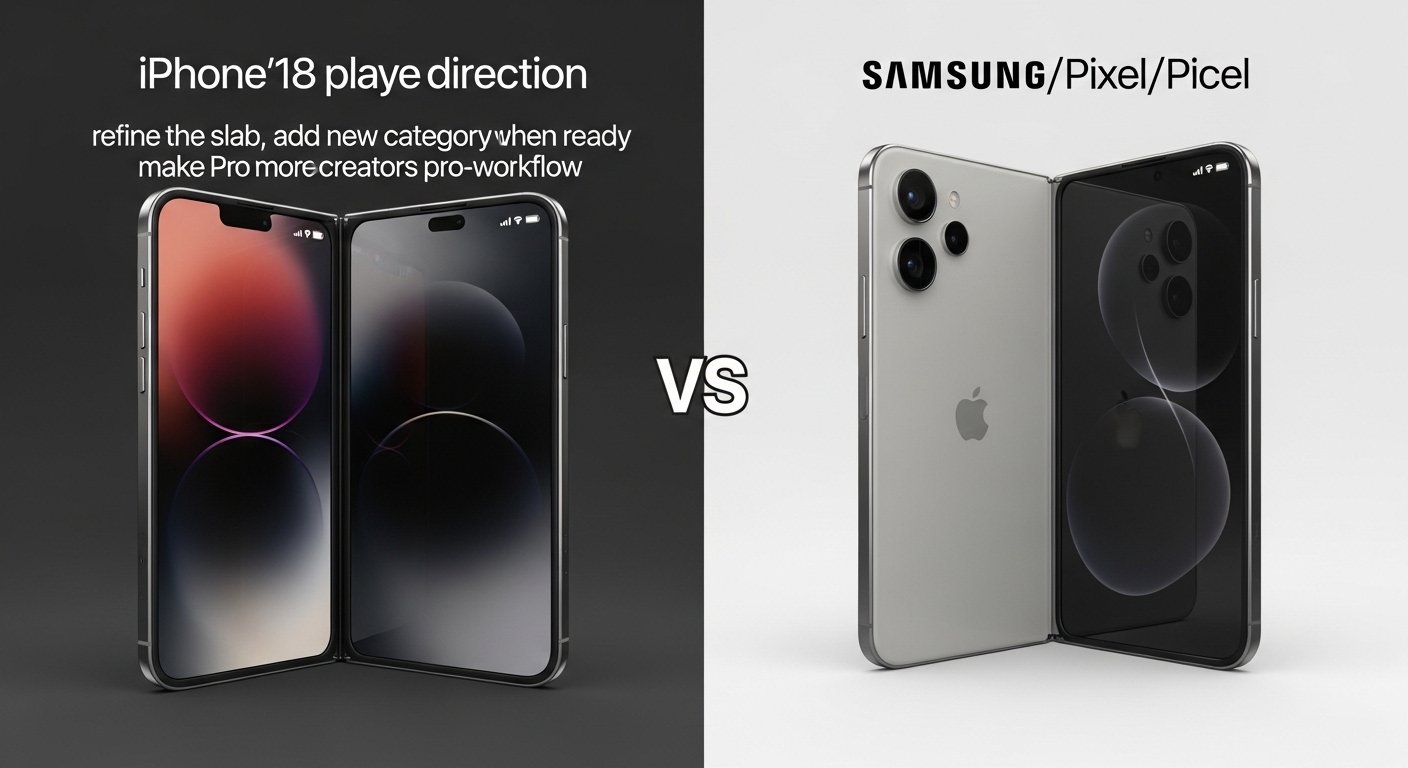
Comparison: iPhone 18 design direction vs Samsung/Google in 2026
Apple’s likely 2026 design playbook (based on recent direction) is “refine the slab, add a new category when ready, and make Pro models more creator/pro-workflow oriented.” Samsung and others have already normalized foldables, and Pixel-like devices often lean into camera-led design with aggressive AI processing philosophies.
Practical implications:
-
People who want the most mature foldable experience today often look to brands already on their 6th–7th generation hardware.
-
People who want predictable resale value, long support expectations, and a conservative approach to biometrics may prefer Apple’s slower, more deliberate cadence—especially if a foldable iPhone ends up being a first-generation product.
When to buy: upgrade timing based on design rumors
-
Upgrade now if the current iPhone is limited by battery health, storage, or camera reliability, because those problems affect daily quality of life more than a potentially thinner bezel.
-
Wait if the purchase is driven by a specific rumored design (foldable form factor, major biometric change, or a new “slim” tier), because those are the rumors most likely to slip or ship with tradeoffs.
One external, official baseline for Apple’s current design priorities is Apple’s iPhone 17 Pro / Pro Max press release, which ties design to thermal performance, battery space, and camera system ambitions:
https://www.apple.com/newsroom/2025/09/apple-unveils-iphone-17-pro-and-iphone-17-pro-max/
Upcoming Apple devices preview
iPhone battery improvements explained
FAQ
Is a foldable iPhone really coming with the iPhone 18 lineup?
MacRumors’ foldable iPhone guide says multiple rumors suggest a September 2026 debut alongside iPhone 18 Pro models, but it remains unconfirmed until Apple announces it.
Will iPhone 18 definitely get under-display Face ID?
There is no official confirmation, and Face ID reliability is a high bar; treat under-display Face ID as a high-risk rumor until proven.
Why do iPhone cameras keep making the phone thicker?
Apple’s own iPhone 17 Pro messaging shows how camera ambition and internal architecture influence physical design and space allocation, which often results in more pronounced camera structures.
Is a thinner iPhone automatically better?
Not if it compromises battery life, thermals, or camera performance; thinness is valuable only when the tradeoffs still fit real usage.
What’s the safest way to use rumors for buying decisions?
Plan around launch windows and product tiers, and only “wait” when the rumored change is worth delaying an upgrade, even if it slips.
