

Samsung’s affordable lineup is broad, but the decision process is simple: entry tiers focus on battery and basics, mid tiers focus on smoother screens and better cameras, and higher A tiers focus on longer-term comfort with fewer compromises. Search interest often starts with Samsung Galaxy A series models, then narrows quickly once priorities are clear: price ceiling, camera expectations, and how many years the phone needs to feel “good enough.”
What does “budget” mean in 2026
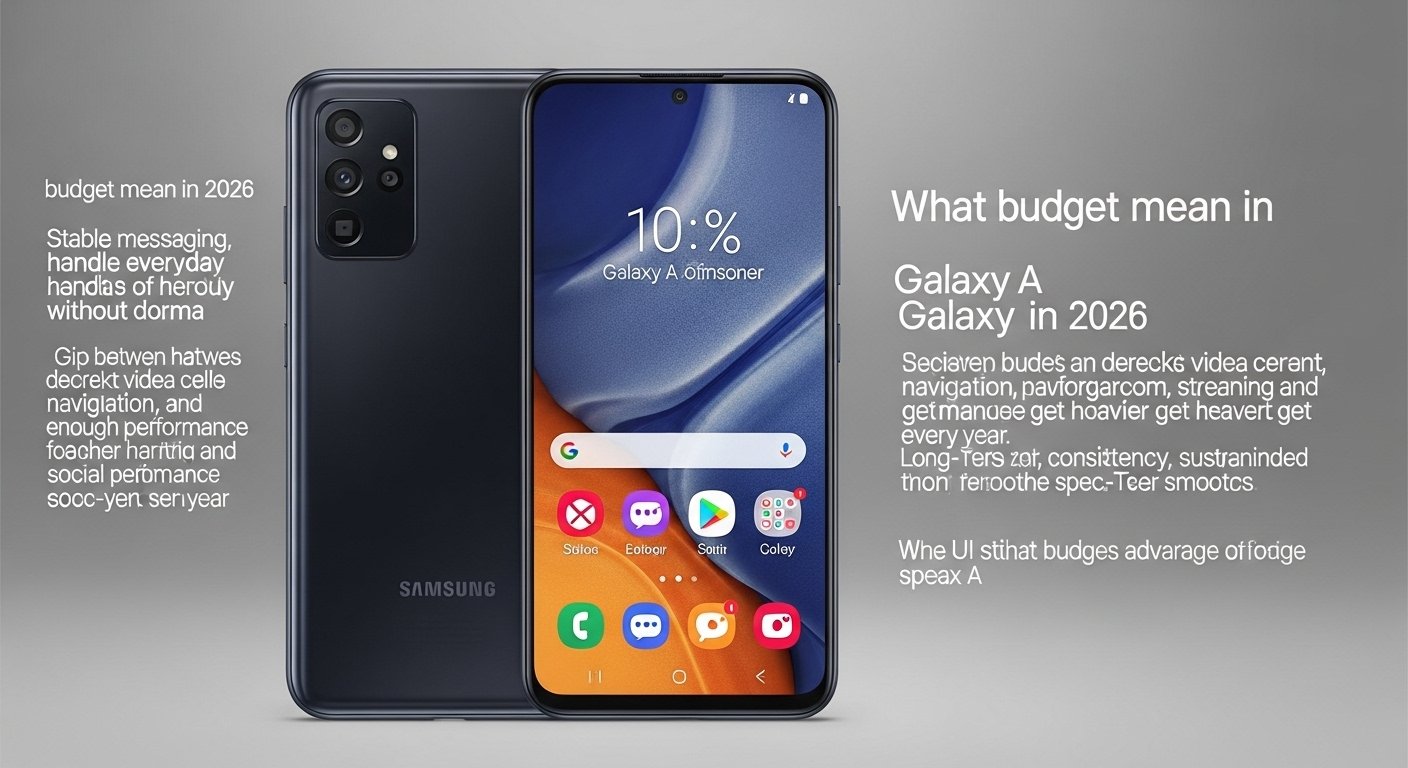
Budget phones in 2026 are expected to handle everyday life without drama: stable messaging, decent video calls, navigation, streaming, and enough performance for social apps that get heavier every year. The gap between budget and flagship has narrowed in some areas, especially battery life and screen size, but it still shows up in camera consistency, sustained performance, and long-term smoothness.
Samsung’s biggest advantage in budget buying is predictability. Galaxy A phones tend to have consistent design language, widely available accessories, and a familiar One UI experience, which makes them easier to own and support than many “spec monster” budget competitors.
The quick picks (by buyer type)
Budget shopping gets easier when it starts with real usage. These categories cover most buyers and help avoid paying for features that won’t be used.
Best overall budget Samsung phone type
The safest all-around pick is usually a mid-tier Galaxy A model that offers a smooth display and enough performance headroom for at least two or three years. This tier typically delivers the biggest “daily feel” improvement over entry phones: less stutter, better camera consistency, and a more premium screen experience.
Best for the lowest price
Entry Galaxy A tiers make sense when the priority is affordability and battery comfort rather than gaming performance or nighttime photography. Expect the basics to be solid, with the biggest compromises showing up in camera results under indoor lighting and longer-term performance as apps grow.
Best for battery confidence
Samsung budget phones often do well on endurance because large batteries are common across the lineup. Battery confidence improves further when the chipset and modem are efficient, which tends to be more consistent in the better-balanced mid tiers.
Best for photos on a budget
Budget camera improvements are less about megapixels and more about reliability: fewer blurry shots indoors, more stable exposure, and cleaner low-light results. A budget phone that nails indoor photos and video stabilization feels far more expensive than one that only performs well outdoors in perfect light.

Which Galaxy A tier to buy (simple breakdown)
Samsung’s budget lineup makes more sense when it’s treated like a ladder. Each step up typically buys smoother everyday performance, stronger camera consistency, and better long-term comfort.
Entry tier (A0x/A1x style models)
This tier focuses on value and battery life. It’s a solid fit for calls, messaging, browsing, streaming, and light photo use, especially for first-time smartphone users or a reliable second phone.
- Best for: basic use, students, parents buying multiple phones, backup devices.
- Expect: big battery, large screen, “good enough” speed for light apps.
- Watch out for: low-light camera performance, slower multitasking, and limited long-term smoothness.
Mainstream value tier (A2x/A3x style models)
This is where Samsung budget phones start to feel confidently mid-range. The upgrades are often immediately noticeable: smoother scrolling, better app switching, and cameras that behave more consistently in everyday conditions.
- Best for: most people who want a phone that stays enjoyable for years.
- Expect: smoother displays, stronger performance, better everyday photos.
- Watch out for: storage options and regional variants that change value.
Premium mid-range tier (A5x style models)
This tier sits at the edge of “budget” and can be the best value when discounts are strong. It’s designed for buyers who want fewer compromises but still want to stay well below Ultra-level pricing.
- Best for: long ownership, heavier daily use, and more demanding camera needs.
- Expect: more consistent processing, fewer slowdowns over time, stronger overall polish.
- Watch out for: buying too high when a discounted flagship is close in price.
The features that matter most (and the ones that don’t)
Budget phone regret usually happens when the wrong features are prioritized. These are the specs that tend to decide satisfaction after the first month.
Display: smoothness over size
Big screens are common on budget phones, so size alone is rarely the differentiator. The true quality upgrade is smoothness and brightness behavior: a higher refresh rate, better touch response, and readable outdoor brightness are the improvements that make daily use feel premium.
Performance: stability over peak numbers
Budget phones can look fast in short demos, then slow down under real use: multitasking, navigation, camera processing, and mobile-data load. The best value phones are the ones that stay stable—less heat, less throttling, and fewer random stutters when switching apps.
Storage: the silent long-term upgrade
Storage is one of the easiest ways to make a phone age better. Apps grow, system storage expands, and photos pile up. Choosing more storage upfront often delivers more real value than paying extra for a minor camera spec bump.
Battery: efficiency matters as much as capacity
Many budget Samsung phones feature large batteries, but battery comfort also depends on efficiency. Weak signal areas, heavy 5G use, and lots of camera time can drain a phone’s battery quickly. Better tiers often feel more reliable because they manage power and heat more consistently.
Cameras: indoor performance is the real test
Outdoor photos can look good on almost any modern phone. The real difference shows up indoors, at night, and with moving subjects. A good budget camera system captures quickly, keeps exposure steady, and avoids turning faces into smudged textures under low light.
Durability and water resistance
Budget phones often cut costs here. Any step up in durability rating and water/dust resistance can be worth paying for, especially for people who keep phones for years or use them outdoors frequently. A slightly more expensive phone can be cheaper in the long run if it avoids a repair.
Budget tiers table: what to expect
This table helps map budget ranges to the Galaxy A ladder and the real-world compromises that tend to come with each step.
| Budget range | Best-fit Galaxy tier | Best for | Common compromises |
|---|---|---|---|
| Lowest budget | Entry A tier | Calls, messaging, streaming, basic apps | Low-light cameras, slower multitasking, shorter “feels fast” window |
| Value sweet spot | Mainstream A tier | Everyday reliability, smoother display, better photos | Fewer premium extras, camera limits vs flagships |
| Upper budget | Premium A tier | Long ownership, fewer compromises, best A experience | Price may overlap with discounted older flagships |
How to choose the right one in 60 seconds
Budget Samsung shopping becomes straightforward with three questions: how long the phone needs to last, where photos are taken most often, and how heavy the app workload is.
If performance matters most
A mainstream or premium Galaxy A tier is the safer choice. Entry tiers can handle basics, but heavy multitasking and newer apps can expose limits faster than expected.
If the camera matters most
Step up at least one tier higher than the cheapest option. Indoor photos, moving kids or pets, and night scenes are where budget cameras differ the most. A phone that captures quickly and processes consistently produces fewer “missed moments.”
If battery matters most
Battery capacity helps, but efficiency decides comfort. For heavy mobile-data days, navigation, and video calls, a better-balanced tier often lasts longer in practice than a bargain model with a large battery number.
When to buy (and when to wait)
Timing changes value more than most spec upgrades do. Samsung budget phones often become better deals during seasonal promotions and carrier trade-in campaigns.
Best time to buy a budget Samsung phone
- Major seasonal sales windows, when storage upgrades and discounts are common.
- Shortly after a lineup refresh, when last-generation models drop in price.
- When a carrier deal reduces the effective price without forcing an expensive plan.
Best time to wait
- If a new Galaxy A wave is close and the current pricing is near MSRP.
- If a phone is being bought for long-term ownership, a better tier may soon enter the budget through discounts.
Common mistakes to avoid
Budget buyers often make the same mistakes across brands. Avoiding these is the fastest path to a purchase that still feels good a year later.
Buying the cheapest model and expecting it to age like a mid-range model
Entry phones can be excellent at the basics, but apps get heavier every year. If long ownership is the goal, stepping up one tier can deliver better value than replacing a bargain phone sooner.
Overpaying for a mid-tier when a discounted older flagship is close
Sometimes the best “budget” move is a discounted older flagship, especially when it includes better cameras, stronger performance headroom, and longer-term polish. Price comparisons should include the effective cost after promotions, not just MSRP.
Ignoring storage
Storage pressure quietly ruins the budget experience: constant cleanup, slower installs, and limited updates. More storage can be the best “performance upgrade” available in a budget purchase.
Assuming 5G equals better reception
5G can be excellent, but reception quality depends on local networks and band support. A phone that performs well on local carriers is more important than a marketing badge.
Related Articles
Read more on Phone Expertise: Galaxy Z Flip 8 leaks and upgrades.
Explore related coverage: Galaxy Z Fold 8 rumors and expectations.
Further analysis available here: Samsung foldable phones in 2026 preview.
FAQ
Which Samsung budget phone is best in 2026?
The best choice usually comes from a mainstream Galaxy A tier that balances a smooth display, enough performance headroom, and a dependable battery experience. The “best” option depends on the budget ceiling and camera expectations.
Are Samsung budget phones good for gaming?
Casual games run well on many budget phones, but heavier games benefit from a stronger chipset and better thermal stability. A higher Galaxy A tier generally provides a smoother experience over longer sessions.
Is it worth paying more for a higher Galaxy A tier?
Paying more is worthwhile when it buys better long-term smoothness, more reliable cameras indoors, and fewer daily compromises. For multi-year ownership, one tier higher often delivers better value than the lowest-cost option.
What specs matter most on a budget Samsung phone?
Display smoothness, storage, and camera consistency matter most for everyday satisfaction. Battery comfort depends on efficiency as much as capacity, especially on mobile data.
Should a budget Samsung phone be bought at launch?
Launch purchases can make sense when promotions are strong, but value often improves after discounts appear. Comparing the effective price after deals is the safest way to avoid overpaying.
