
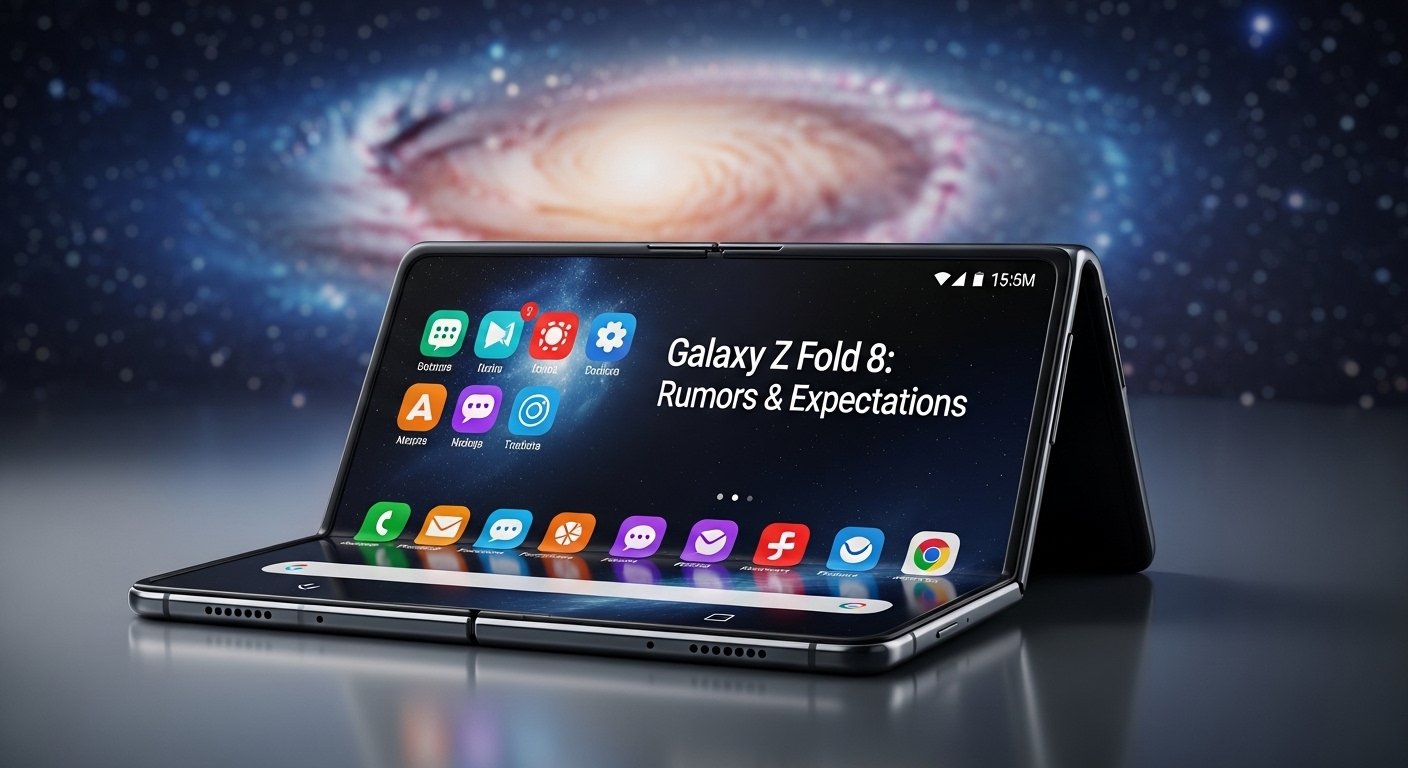
For buyers, the timing matters because foldables are not impulse purchases. Deals and trade-ins can change the real cost dramatically, and durability confidence is still part of the decision. A Fold generation becomes “worth waiting for” only when it solves everyday annoyances: the cover screen feeling cramped, the inner screen crease catching light, battery comfort under mobile data, and the worry of long-term hinge wear.
Search interest is also clustering around timing, often framed as the Galaxy Z Fold 8 release date, but the more useful approach is watching which upgrades seem consistent across reporting and which claims feel like wish lists.
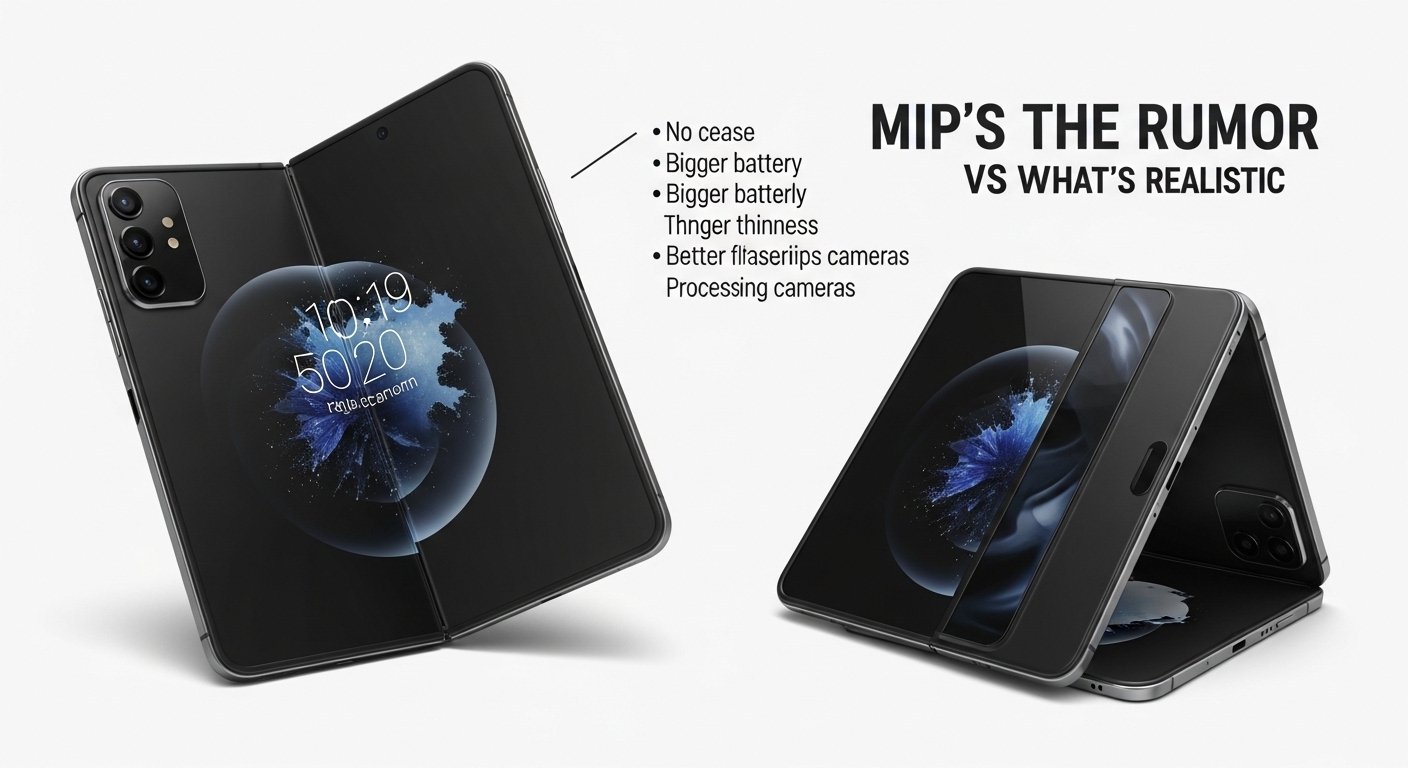
What’s the rumor vs what’s realistic
Foldable rumor cycles often exaggerate the same three promises: “no crease,” “bigger battery,” and “Ultra-level cameras.” Some of those goals are technically possible, but the trade-offs are real: thicker layers to hide a crease can add weight, bigger batteries fight thinness, and flagship cameras compete with hinge engineering for space.
The most believable expectations tend to be incremental but meaningful: better durability, better efficiency, better screen readability, and camera improvements driven by processing as much as hardware.
Why Samsung might change the Fold’s shape
A book-style foldable lives or dies by ergonomics. If the cover screen feels too narrow for typing and the inner screen feels too tall for spreadsheets and reading, the device becomes a “cool gadget” instead of a daily tool. A wider Fold would directly address that complaint and make multitasking layouts feel more natural.
That change would also signal a bigger strategy: positioning the Fold as a productivity device first, not just a premium phone that happens to open up.
Design expectations: thinner, lighter, and less awkward
Thinness is not just marketing on a Fold. A slimmer profile improves pocket comfort, makes one-handed use less tiring, and helps the device feel less like two phones stacked together. The challenge is maintaining rigidity and battery comfort while reducing bulk.
Weight matters even more than thickness for long ownership. A few grams can change how the phone feels during commuting, reading sessions, and long camera use.
Cover screen usability gets more attention.
Real-world Fold usage often happens on the cover screen. Messaging, maps, quick calls, and camera framing happen before the device opens. If Samsung improves the cover screen’s typing comfort, aspect ratio, and app scaling, the Fold becomes more practical even without major inner-screen changes.
Better cover-screen usability also reduces hinge cycles, which is a quiet durability win over time.
Display and crease talk: what “creaseless” usually means.s
The crease is the most visible reminder that a foldable is still a compromise. Even when it’s shallow, it catches reflections in bright indoor lighting. Rumors about a “creaseless” Fold should be read carefully because the term can mean several things: less visible at certain angles, less noticeable to touch, or significantly reduced compared to the previous generation.
A true “invisible crease” across all lighting conditions is an extremely high bar. A more realistic win is a crease that’s harder to notice during reading, video, and browsing—where the inner display is supposed to feel natural.
Brightness and reflections matter more than spec numbers
Foldables are often used for reading and multitasking, which exposes weaknesses in reflections and outdoor visibility. Any improvement that increases readability in bright conditions will feel more valuable than a small resolution bump.
The most satisfying foldable screens are the ones that disappear into the background—no distracting reflections, no uneven brightness, no odd scaling.
Hinge and durability: the upgrade that decides trust
Durability is the foldable buying barrier. The hinge is a moving part, the inner screen is softer than glass, and repairs can be expensive. That’s why hinge improvements matter even when they’re hard to photograph.
Expectations for the next Fold generation usually center on dust resistance, long-term hinge consistency, and fewer “micro-creaks” over time.
What durability upgrades look like in daily use
- Smoother open/close feel without gritty resistance.
- More consistent “fully open” flatness across months of use.
- Less wobble and a sturdier feel when tapping on the inner display.
- Better reliability when carried in pockets and bags with everyday dust.
Battery and charging: the comfort problem
Foldables have a battery challenge: two displays, big screens, and premium chips. The most meaningful improvement would be a better “confidence buffer” on mobile data—navigation, camera use, and multitasking without watching the percentage drop.
A battery win doesn’t require a massive capacity leap. Better efficiency from the chipset and modem, plus smarter display tuning, can deliver a noticeable change even if the battery number stays close.
Charging expectations
Charging speed on foldables has often been conservative compared to some competitors. A practical improvement would be faster, cooler top-ups rather than chasing a peak wattage that throttles quickly. The key metric is real-time from low battery to “ready to leave,” not a marketing number.
Cameras: the premium price pressure
The Fold’s camera system has historically balanced “good enough” against physical constraints. That balance is harder to justify as foldables remain expensive and slab flagships keep improving. Expectations for the next Fold generation focus on two things: better low-light consistency and more reliable zoom quality.
A camera upgrade can be driven by processing as much as hardware. Faster capture, better HDR tuning, and less motion blur indoors can make a Fold feel dramatically better without changing the lens count.
What would count as a real camera leap
- Cleaner indoor photos with fewer blurred frames.
- More consistent color and exposure across lenses.
- Better video stabilization while walking.
- Improved telephoto clarity without aggressive over-sharpening.
Performance and thermals: sustained use matters
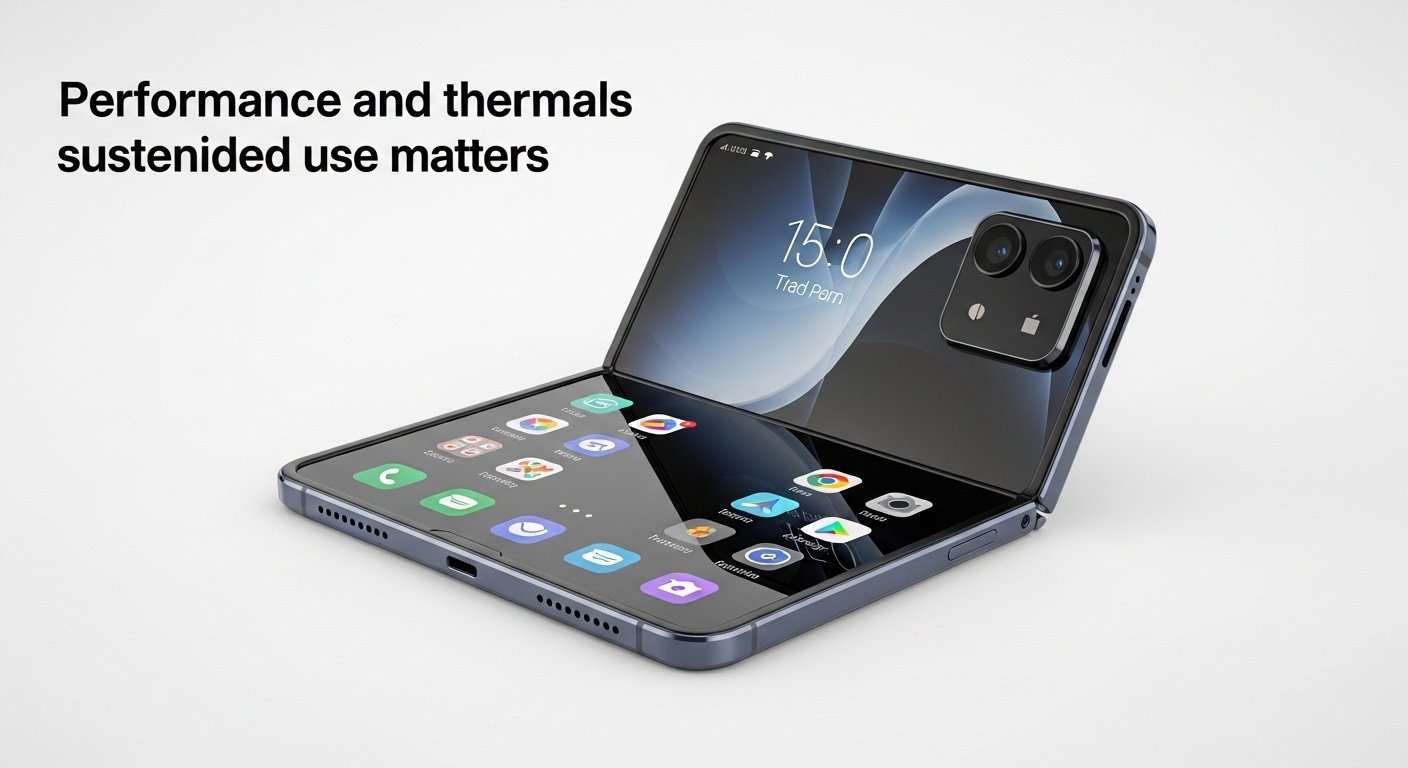
Foldables often run hot because the hardware is compact and the workloads are heavy. Heat shows up during video capture, gaming, navigation, and long multitasking sessions—exactly the situations where a Fold should feel strongest.
Performance improvements that matter in 2026 are usually thermal and efficiency gains: a Fold that stays stable under load feels faster than a Fold that spikes and throttles.
AI and on-device features
Samsung’s software direction increasingly treats premium devices as AI platforms. Foldables have an advantage here: more screen space for side-by-side context. The most useful AI features are likely to be the ones that save time in real workflows—summaries, translation, content extraction, and smarter editing—without constant cloud dependence.
Feature availability can still vary by region and model tier, especially for advanced tools that require newer chipsets.
Software: foldable polish is the real differentiator
Hardware is only half the Fold story. The experience depends on app scaling, multitasking flow, and continuity between cover and inner screens. If the software feels like a stretched phone layout, the Fold becomes harder to justify.
The best foldable updates are subtle: faster split-screen actions, smoother dragging and dropping between windows, cleaner task switching, and fewer apps that break layouts when the screen changes.
What to watch for in early reviews
- How often do apps reflow correctly when opening and closing?
- Whether multitasking feels faster or just more complicated.
- How well Samsung’s own apps support the inner display.
- Whether battery drain increases with multi-window use.
Pricing expectations and the value trap
Foldables are heavily influenced by promotions. Trade-ins, bundle credits, and storage upgrades can change the effective price far more than small MSRP shifts. A foldable that looks expensive at launch can become reasonable during the right deal window.
Value decisions also depend on how long the phone will be kept. Foldables make more sense when the inner screen replaces part of a tablet routine or enables frequent multitasking that a slab phone can’t match.
What to watch next
Rumor noise grows as launch season approaches. The most useful signals tend to be the practical ones: accessory ecosystem movement, carrier preparation, and credible reports that repeat the same themes over time.
- Accessory listings that reveal dimensions and button placement.
- Carrier and retailer preparation pages that hint at storage tiers and colors.
- Repeated reporting on shape changes (wider design) rather than one-off claims.
- Early durability and crease impressions from hands-on coverage.
Should waiting for Fold 8 make sense?
Waiting makes sense when current foldables feel like they miss a key requirement: comfort on the cover screen, battery confidence, or long-term durability trust. If those are the pain points, a generation that improves them can feel like a real upgrade.
Buying current-generation hardware can still be smarter when the discount is large enough. Foldables often deliver their best value after launch, when trade-ins rise, and prices soften.
Read more (Phone Expertise)
Read more on Phone Expertise: Samsung foldable phones in 2026 preview.
Explore related coverage: Samsung Galaxy roadmap for 2026.
Further analysis available here: Samsung One UI 8 update: features and supported devices.
FAQ
Will Galaxy Z Fold 8 fix the crease?
Many rumors focus on crease reduction, but “creaseless” can mean less visible under certain angles rather than fully invisible. The meaningful test is whether reflections are less distracting during reading and video.
Is a wider Galaxy Z Fold 8 likely?
Wider design talk keeps appearing because it solves a real usability complaint: narrow cover screens and tall inner screens. Whether Samsung changes the shape depends on engineering trade-offs and positioning.
Will Galaxy Z Fold 8 have better cameras?
A camera upgrade is a common expectation because foldable pricing creates pressure to match flagship consistency. Processing improvements can deliver a noticeable upgrade even if hardware changes are modest.
Is it worth waiting to buy a foldable in 2026?
Waiting is most worthwhile when the next generation addresses daily pain points like battery comfort, cover-screen usability, and durability confidence. Buying during strong trade-in windows can be the better value move when discounts are deep.
What’s the safest way to buy a foldable?
Warranty terms, repair coverage, and regional service quality matter more for foldables than for slab phones. A protective case and sensible care around dust and debris also reduce long-term risk.
